- Space
- Astronomy
The twin telescopes of the Gemini Observatory mark 25 years of discovery as students name distant nebula Ua ʻŌhiʻa Lan.
0 Comments Join the conversationWhen you purchase through links on our site, we may earn an affiliate commission. Here’s how it works.
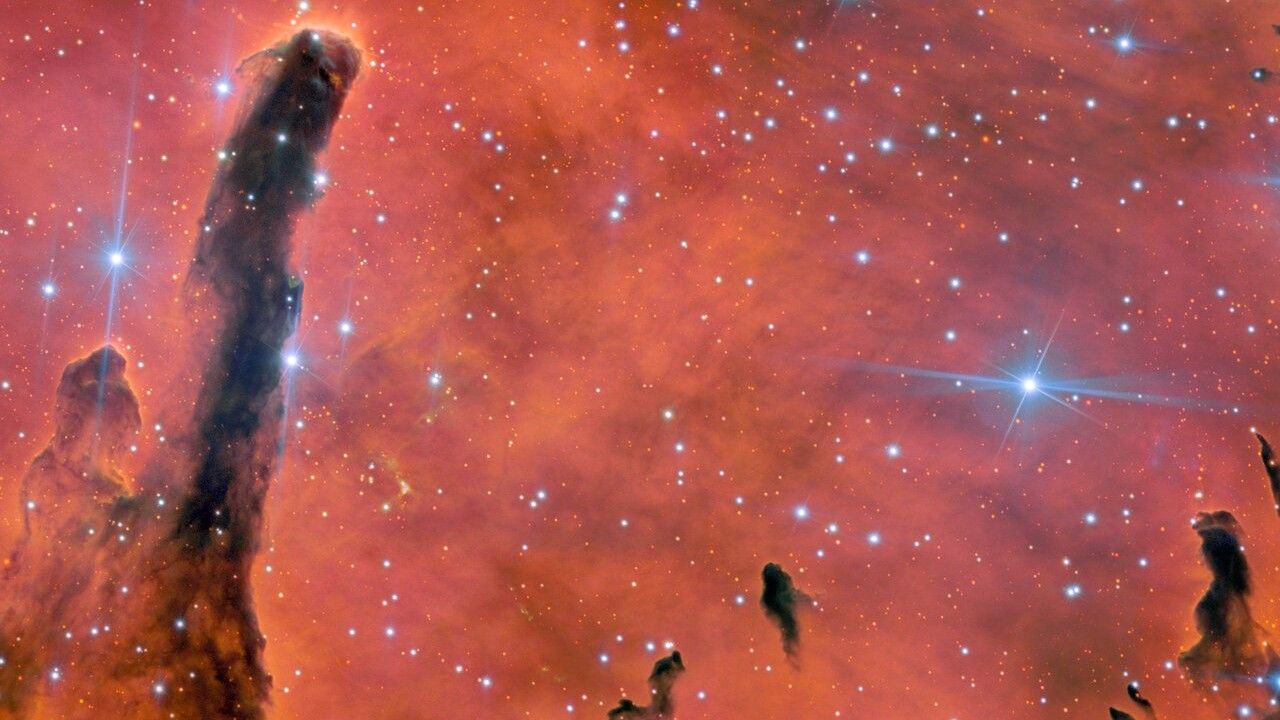
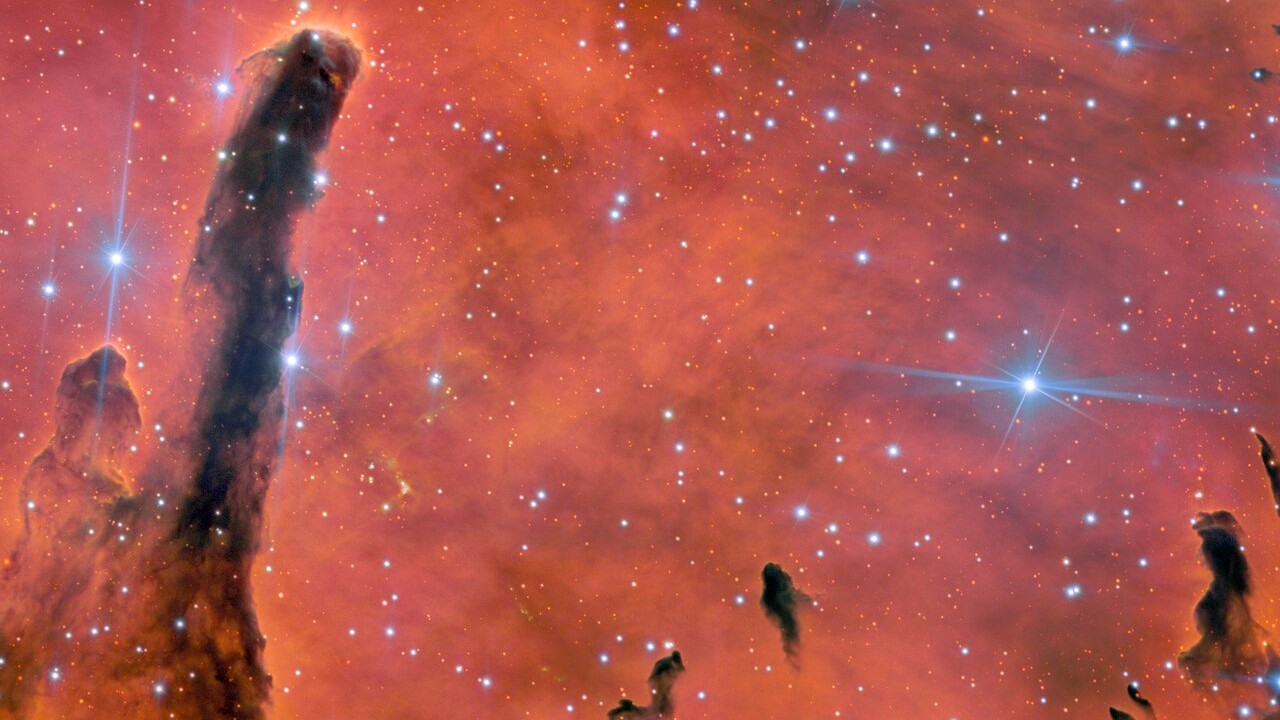 The structure called Ua ʻŌhiʻa Lani, which means the Heavenly ʻŌhiʻa Rains, echoes the legendary 'Pillars of Creation'
(Image credit: International Gemini Observatory/ NOIRLab /NSF /AURA)
Quick facts
The structure called Ua ʻŌhiʻa Lani, which means the Heavenly ʻŌhiʻa Rains, echoes the legendary 'Pillars of Creation'
(Image credit: International Gemini Observatory/ NOIRLab /NSF /AURA)
Quick factsWhat it is: Emission nebula NGC 6820 and open star cluster NGC 6823
Where it is: 6,000 light-years away in the constellation Vulpecula
When it was shared: Nov. 19, 2025
This spectacular image of an emission nebula — a cloud of gas and dust lit up by nearby stars — and a nearby star cluster has been published by the Gemini Observatory to mark its 25th anniversary.
The image, which is available as a zoomable version online, captures the hot, massive stars in NGC 6823 — shown as specks of blue-white light — illuminating the veil of red gas that comprises NGC 6820. The pillars in the image are gas and dust sculpted by the stars' intense radiation.
You may like-
 James Webb telescope's 'starlit mountaintop' could be the observatory's best image yet — Space photo of the week
-
 Hubble went supernova hunting — and found something unexpected: Space photo of the week
-
 James Webb Space Telescope reveals thick cosmic dust of Sagittarius B2, the most enormous star-forming cloud in the Milky Way — Space photo of the week
NGC 6820 and NGC 6823 lie in the middle of the Summer Triangle, the famous asterism created by the bright stars Deneb, Vega and Altair. They’re visible low in the west immediately after dark, as seen from the Northern Hemisphere.
In Hawaii — home to the Gemini North telescope, which began operations in June 1999 — the Summer Triangle is known as Mānaiakalani, the Great Fishhook of Maui. As part of the image’s release, it’s been named Ua 'Ōhi'a Lani, which means the Heavenly 'Ōhi'a Rains, by four local high school students participating in the University of Hawaii's Project Hōkūlani summer internship.
The image was taken using the Gemini North telescope on the summit of Maunakea, a shield volcano on Hawaii that hosts 13 large telescope observatories. However, the International Gemini Observatory comprises twin 8-meter telescopes, with the other — Gemini South — located on Cerro Pachón in the Chilean Andes. It achieved first light in November 2000. Together, the two scopes give astronomers access to nearly the entire night sky.
"This image is crimson and red like lava because of the abundance of hydrogen gas present in the nebula," Hope Arthur, one of the Gemini interns, said in a statement. The name comes from a story about Pele, the goddess of volcanoes and fire in Hawaiian religion and the creator of the Hawaiian Islands.
Sign up for the Live Science daily newsletter nowContact me with news and offers from other Future brandsReceive email from us on behalf of our trusted partners or sponsorsBy submitting your information you agree to the Terms & Conditions and Privacy Policy and are aged 16 or over.related stories—First Vera Rubin Observatory image reveals hidden structure as long as the Milky Way trailing behind a nearby galaxy
—Unprecedented radio view of the Milky Way took over 40,000 hours to construct
—Webb reveals a fiery starburst in the Cigar Galaxy
"One of Pele's most well-known stories is that of 'Ōhi'a and Lehua. Their story is about regrowth after tragedy and the act of new beginnings, which we felt was evocative of the cycle of stellar life, death, and rebirth," Arthur said.
"The baby blue stars in the image reminded us of rain and how, in the story of 'Ōhi'a and Lehua, when you pick the lehua blossoms, it rains," added Iolani Sanches, an intern at the University of Hawaii at Mānoa.
For more sublime space images, check out our Space Photo of the Week archives.
TOPICS space photo of the week Jamie CarterSocial Links NavigationLive Science contributor
Jamie Carter is a freelance journalist and regular Live Science contributor based in Cardiff, U.K. He is the author of A Stargazing Program For Beginners and lectures on astronomy and the natural world. Jamie regularly writes for Space.com, TechRadar.com, Forbes Science, BBC Wildlife magazine and Scientific American, and many others. He edits WhenIsTheNextEclipse.com.
You must confirm your public display name before commenting
Please logout and then login again, you will then be prompted to enter your display name.
Logout Read more James Webb telescope's 'starlit mountaintop' could be the observatory's best image yet — Space photo of the week
 Hubble went supernova hunting — and found something unexpected: Space photo of the week
 James Webb Space Telescope reveals thick cosmic dust of Sagittarius B2, the most enormous star-forming cloud in the Milky Way — Space photo of the week
 Soar through 44 million stars in Gaia telescope's latest 3D map of our galaxy — Space photo of the week
 Giant 'diamond ring' sparkles 4,500 light-years away in the Cygnus constellation — Space photo of the week
 Scientists map the shape of a supernova for the first time ever: Space photo of the week
Latest in Astronomy
Scientists map the shape of a supernova for the first time ever: Space photo of the week
Latest in Astronomy
 New 3I/ATLAS images show the comet getting active ahead of close encounter with Earth
 Giant sunspot on par with the one that birthed the Carrington Event has appeared on the sun — and it's pointed right at Earth
 Geminids 2025: The year's best meteor shower is coming, with a second shower hot on its tail
 Giant rotating string of galaxies is 'probably the largest spinning object' in the known universe
 JWST spots a planet chasing its own atmosphere through space
 Cold Moon 2025: See the last and highest full moon of the year
Latest in News
Ethereal structure in the sky rivals 'Pillars of Creation' — Space photo of the week
Cold Moon 2025: See the last and highest full moon of the year
Latest in News
Ethereal structure in the sky rivals 'Pillars of Creation' — Space photo of the week
 Unusual, 1,400-year-old cube-shaped human skull unearthed in Mexico
 1,800-year-old 'piggy banks' full of Roman-era coins unearthed in French village
 CDC panel, stuffed with vaccine skeptics, votes to end recommendation for universal newborn hepatitis B vaccination
 Science news this week: A human population isolated for 100,000 years, the biggest spinning structure in the universe, and a pit full of skulls
 Male human heads found in a 'skull pit' in an ancient Chinese city hint at sex-specific sacrifice rituals
LATEST ARTICLES
Male human heads found in a 'skull pit' in an ancient Chinese city hint at sex-specific sacrifice rituals
LATEST ARTICLES 1What was the loudest sound ever recorded?
- 2New NASA, ESA images show 3I/ATLAS getting active ahead of its close encounter with Earth
- 3Unusual, 1,400-year-old cube-shaped human skull unearthed in Mexico
- 41,800-year-old 'piggy banks' full of Roman-era coins unearthed in French village
- 5What if Antony and Cleopatra had defeated Octavian?