- Archaeology
- Romans
An excavation in a small French village reveals three jars with thousands of Roman coins.
0 Comments Join the conversationWhen you purchase through links on our site, we may earn an affiliate commission. Here’s how it works.
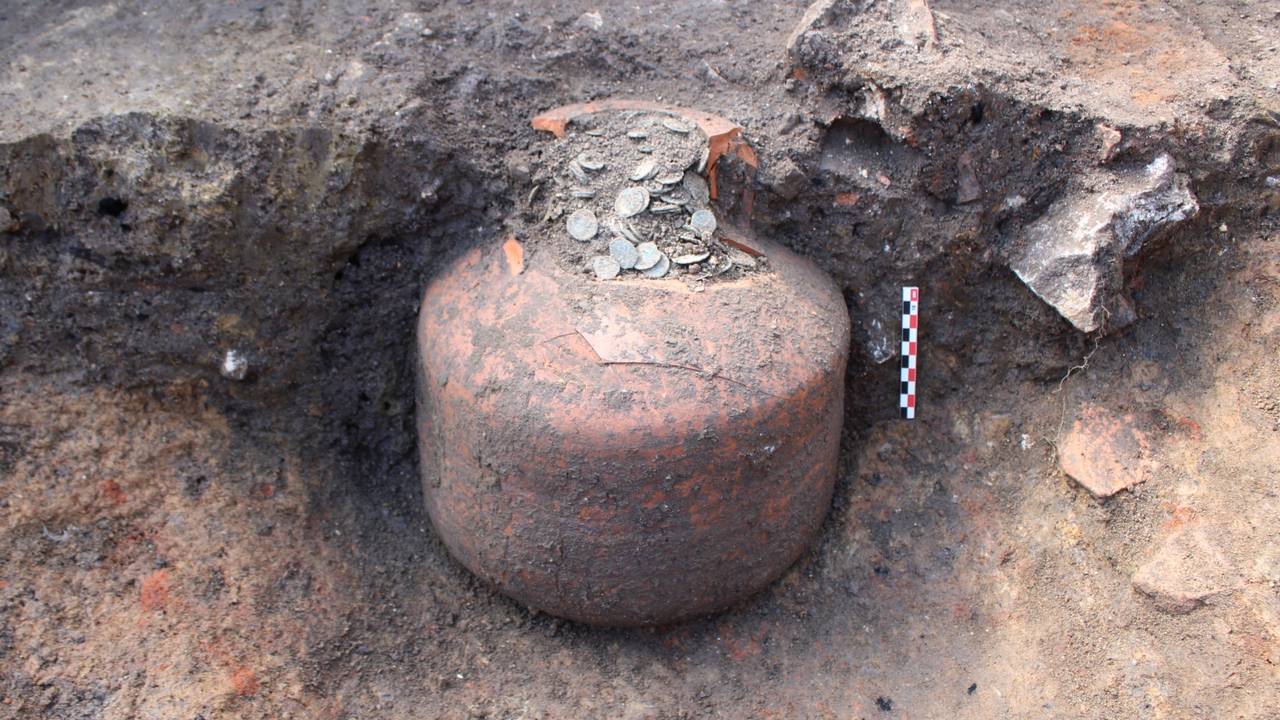
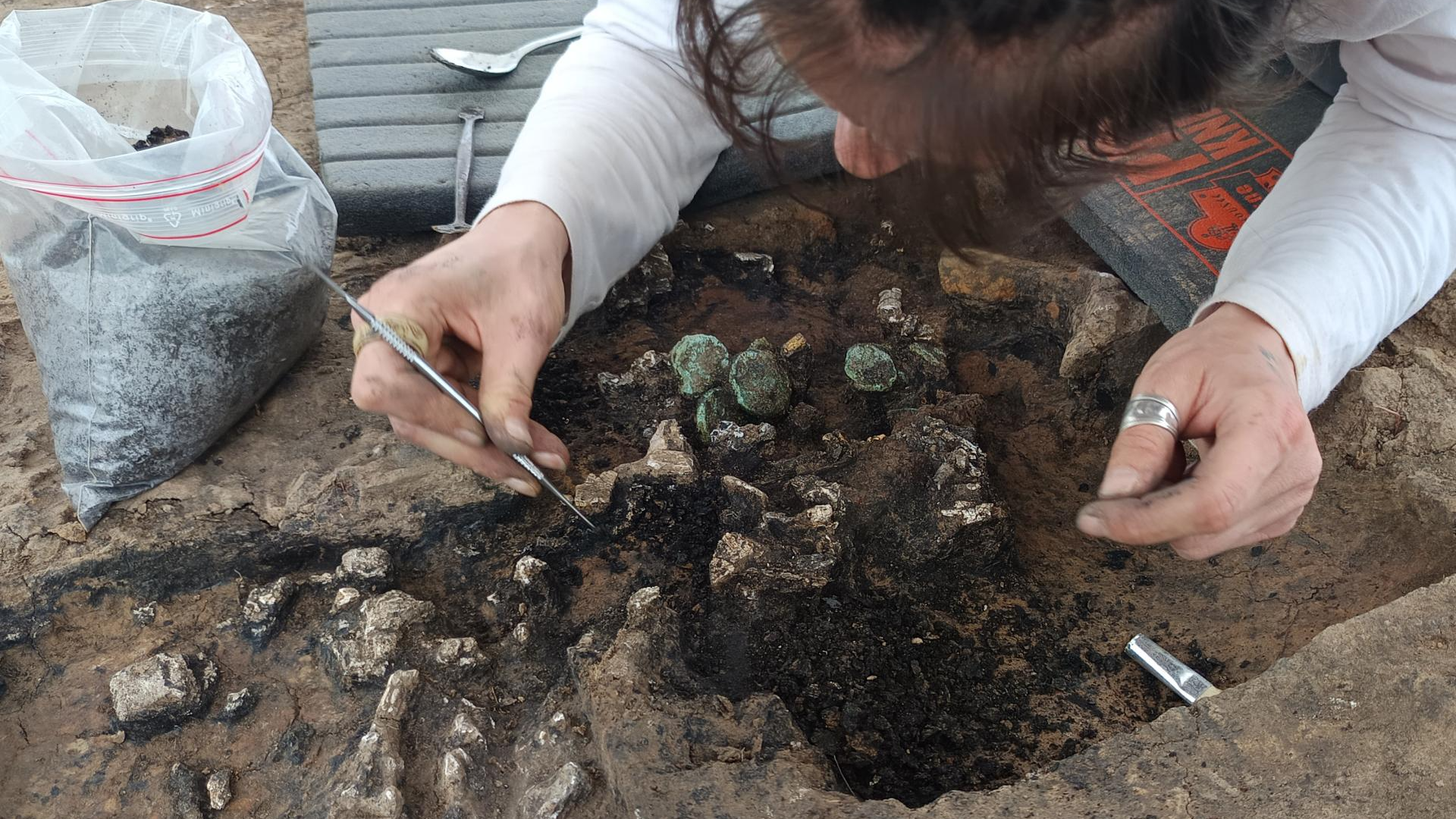
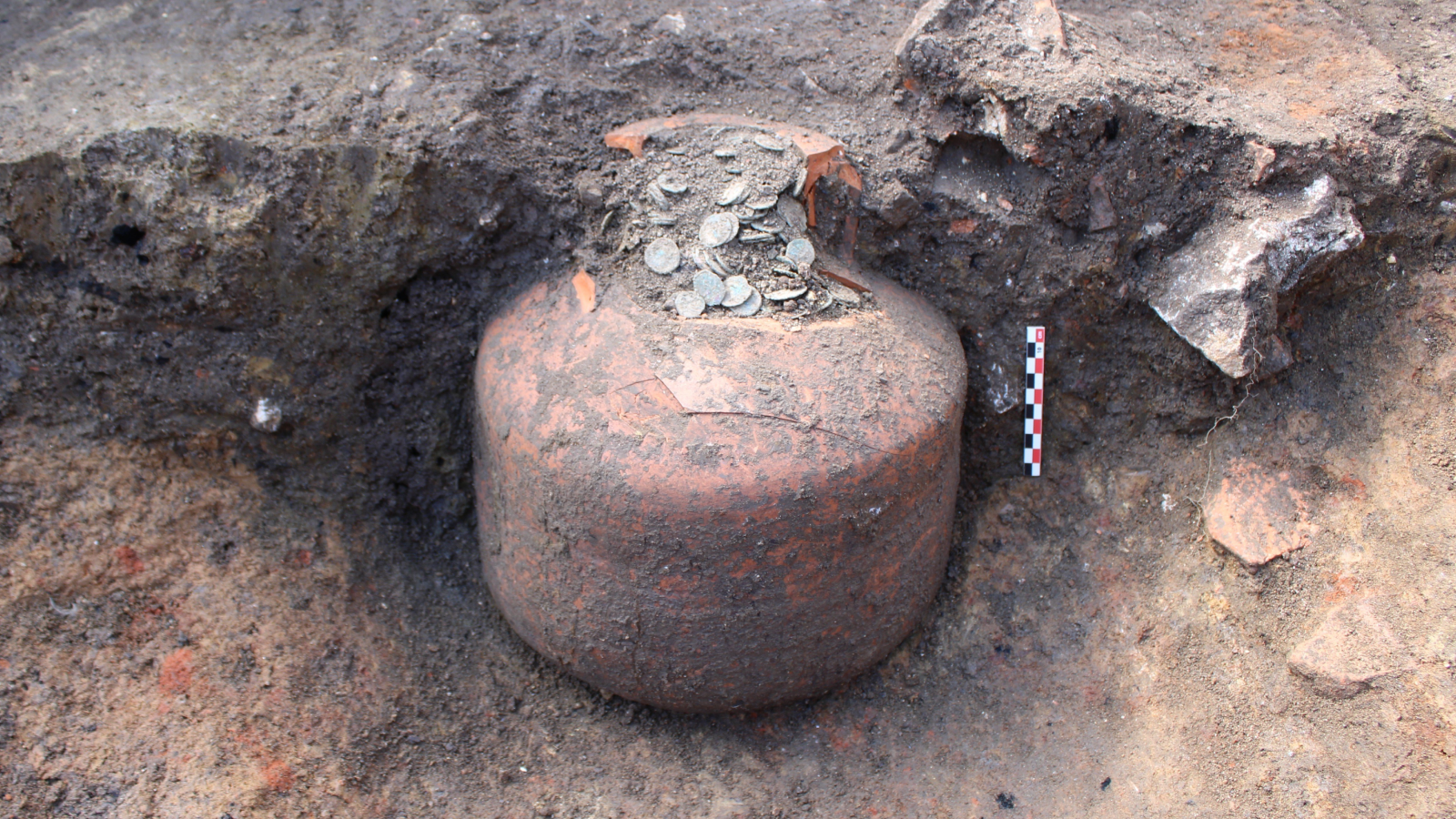 A jug holding a vast number of Roman coins was found during an excavation at a French village.
(Image credit: © Simon Ritz, Inrap)
A jug holding a vast number of Roman coins was found during an excavation at a French village.
(Image credit: © Simon Ritz, Inrap)
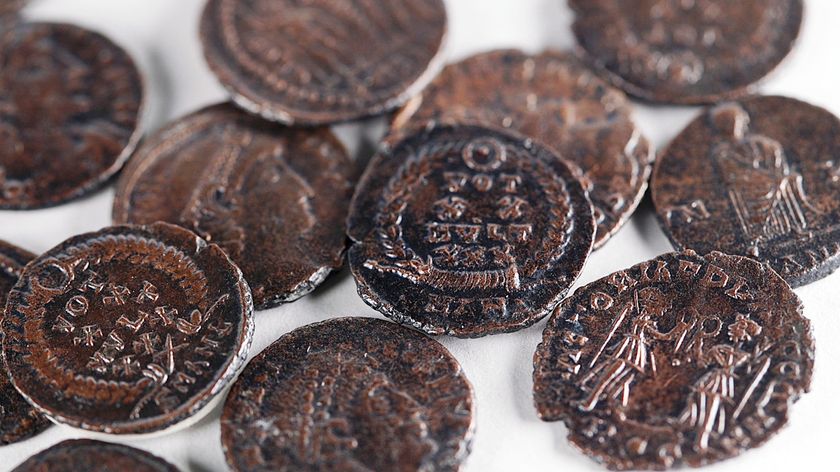
Archaeologists in France have discovered three ancient storage jars brimming with tens of thousands of Roman coins. The vessels were buried in pits 1,700 years ago in the house floor of an ancient settlement, possibly as a type of safe or piggy bank.
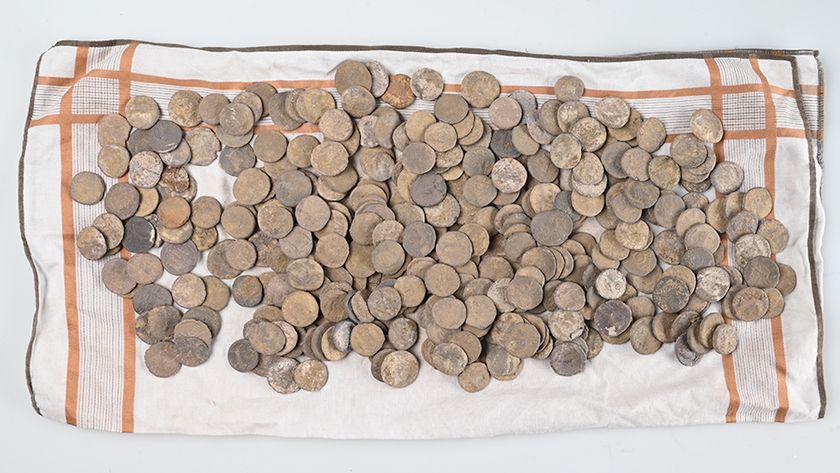
These three jugs, known as amphorae, were uncovered during excavations run by the National Institute for Preventive Archaeological Research (INRAP) in the village of Senon in northeastern France, and may contain a total of more than 40,000 Roman coins.
The first hoard held an estimated 83 pounds (38 kilograms) of coins, which "corresponds to approximately 23,000 to 24,000 coins," Vincent Geneviève, a numismatist with INRAP who is analyzing the hoards, told Live Science in an email.
You may like-
 'Illegal' metal detectorist found a huge hoard of Roman treasure in Germany — and kept it hidden for 8 years
-
 2,000-year-old gold ring holds clue about lavish cremation burial unearthed in France
-
 1,600-year-old coin hoard found in complex tunnel system under Galilee dates to last Jewish rebellion against Romans
The second jug and its coins weighed about 110 pounds (50 kg), "and, based on the 400 coins recovered from the neck, which was broken at the time of discovery, it could contain 18,000 to 19,000 coins," Geneviève said. The third jug was retrieved in ancient times and only three coins were left in the pit where the vessel once sat.
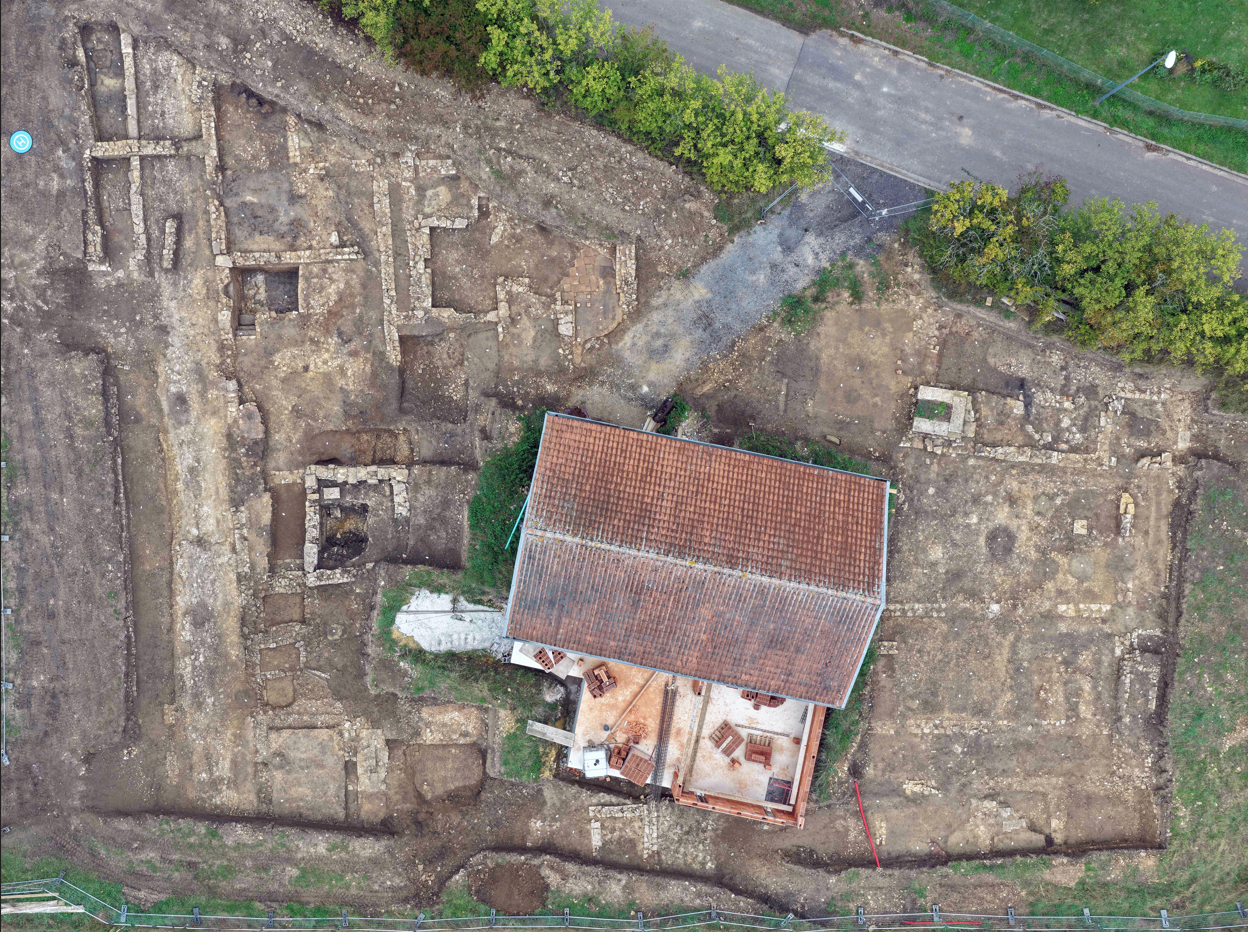
Around 30 coin hoards are already known in this area, so the real significance of this find lies not in the sheer number of coins but in the detailed information about where the hoards were found.
"Contrary to what one might think at first look, it is not certain that these are 'treasures' that were hidden during a period of insecurity," according to a Nov. 26 translated statement from INRAP. Experts believe based on the dates on the coins that the amphoras were buried between A.D. 280 and 310.
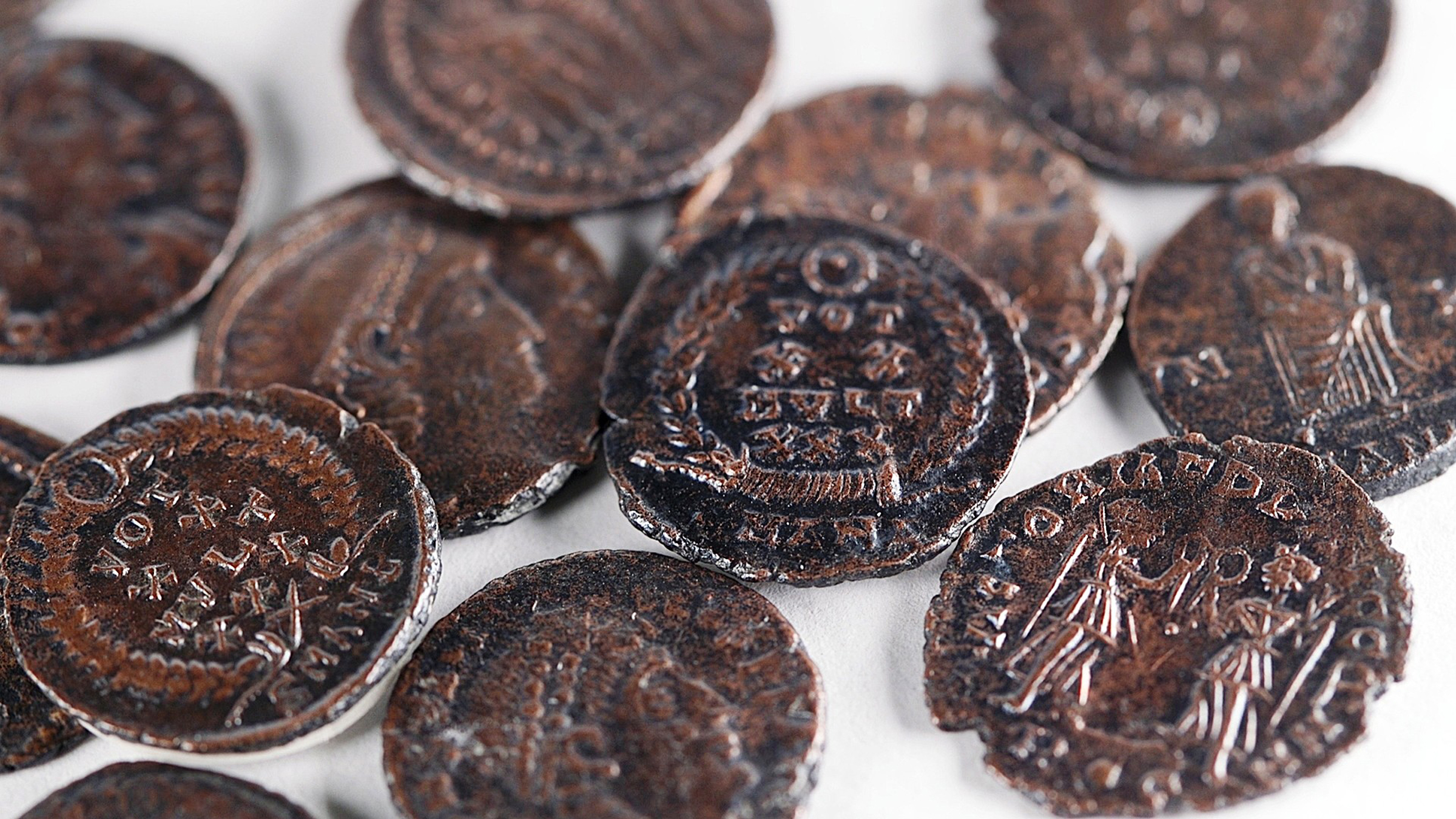
Among the hoard are coins that feature busts of the emperors Victorinus, Tetricus I, and his son Tetricus II, the emperors of the so-called Gallic Empire, which ruled Gaul and the surrounding provinces independently of the rest of the Roman Empire from 260 to 274, until it was reintegrated by emperor Aurelian in 274.
Sign up for the Live Science daily newsletter nowContact me with news and offers from other Future brandsReceive email from us on behalf of our trusted partners or sponsorsBy submitting your information you agree to the Terms & Conditions and Privacy Policy and are aged 16 or over.Hastily hidden treasures or long-term savings?
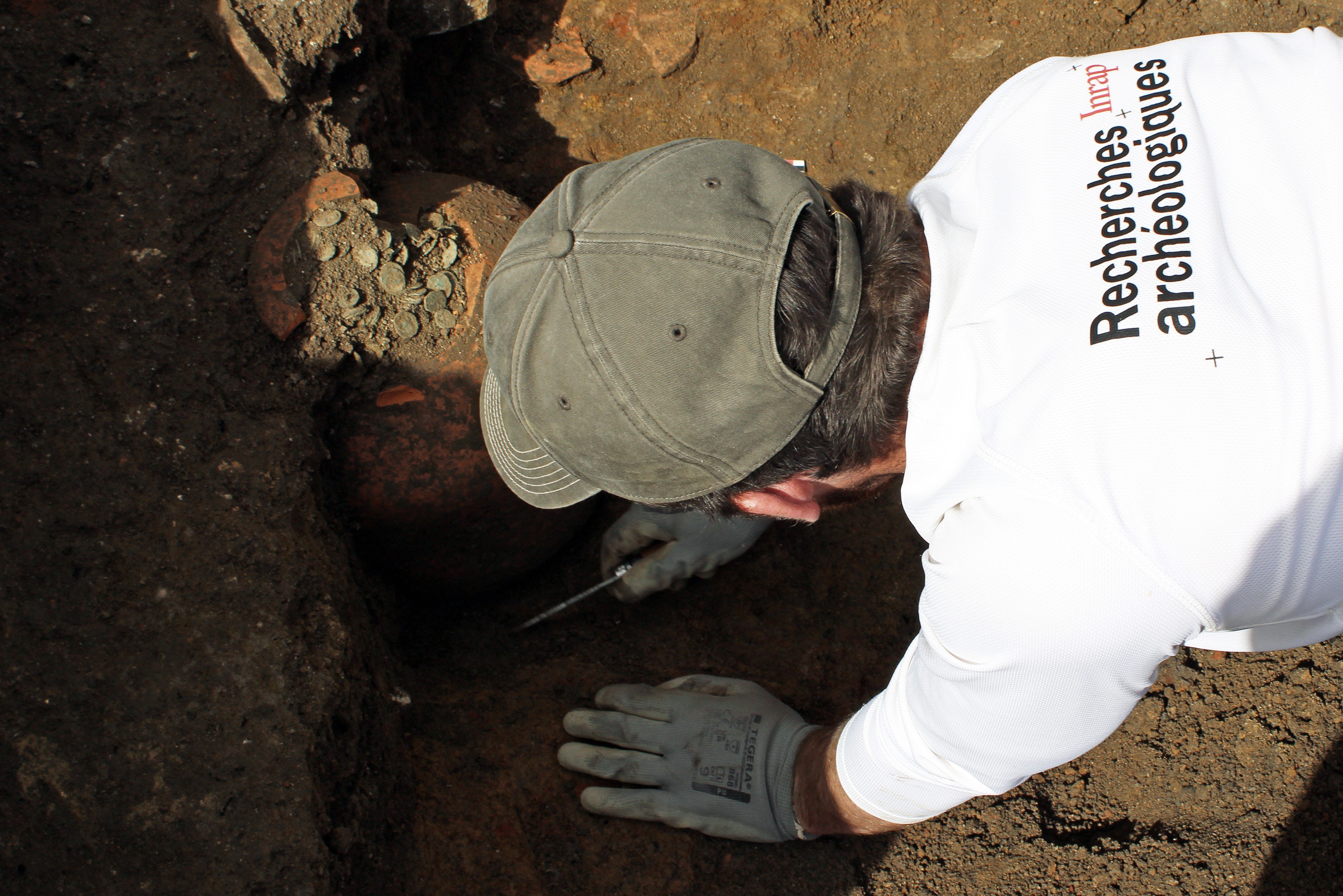
The coin-stuffed amphoras had been carefully sunk into well-constructed pits within the living room of a residence. The jugs' openings were level with the ground and therefore easily accessible as a kind of ancient piggy-bank.
RELATED STORIES—1,900-year-old 'treasure' found in Roman-era family's scorched house in Romania
—1,700-year-old Roman hoard includes gold coins depicting illegitimate emperor
—Rare Roman-era silver ingots depicting Constantine the Great seized from alleged black-market sale
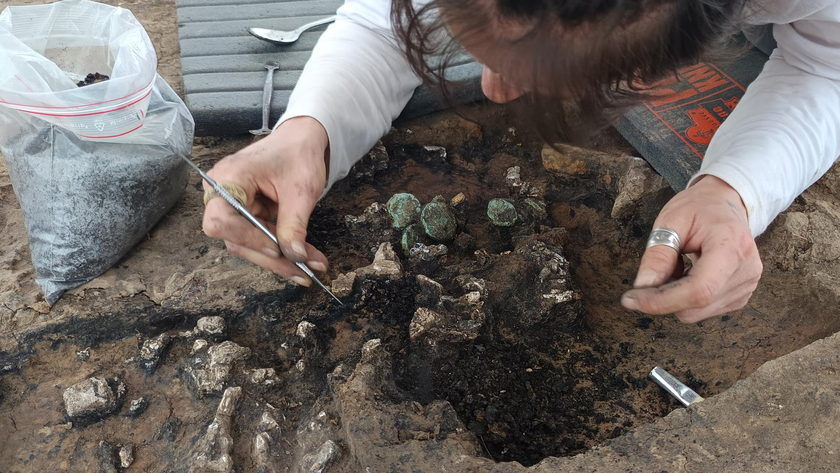
"In two cases, the presence of a few coins found stuck to the rim of the jar clearly indicate that they were deposited after the vase was buried, when the pit had not yet been filled with sediment," according to the statement.
The accessible jars suggest the owners were using them as a long-term savings vehicle rather than a hastily hidden hoard. Within this residential district were stone buildings with underfloor heating, basements and workshops with stoves. There was also a Roman fortification nearby.
At the beginning of the fourth century, a large fire destroyed the settlement. Although the settlement was re-established before a second fire led to its permanent abandonment, the coin deposits were lost for nearly two millennia.
Roman emperor quiz: Test your knowledge on the rulers of the ancient empire
 Marjanko PilekićLive Science contributor
Marjanko Pilekić is a Germany-based research associate in Halle/Saale, specializing primarily in numismatics, with additional interests in ancient history and archaeology. He holds a bachelor's degree in history from the University of Freiburg, a master's in ancient history from Heidelberg University, and completed his doctorate in numismatics at Goethe University Frankfurt. As a freelancer at Live Science, he writes about exciting coin finds and other intriguing archaeological discoveries.
You must confirm your public display name before commenting
Please logout and then login again, you will then be prompted to enter your display name.
Logout Read more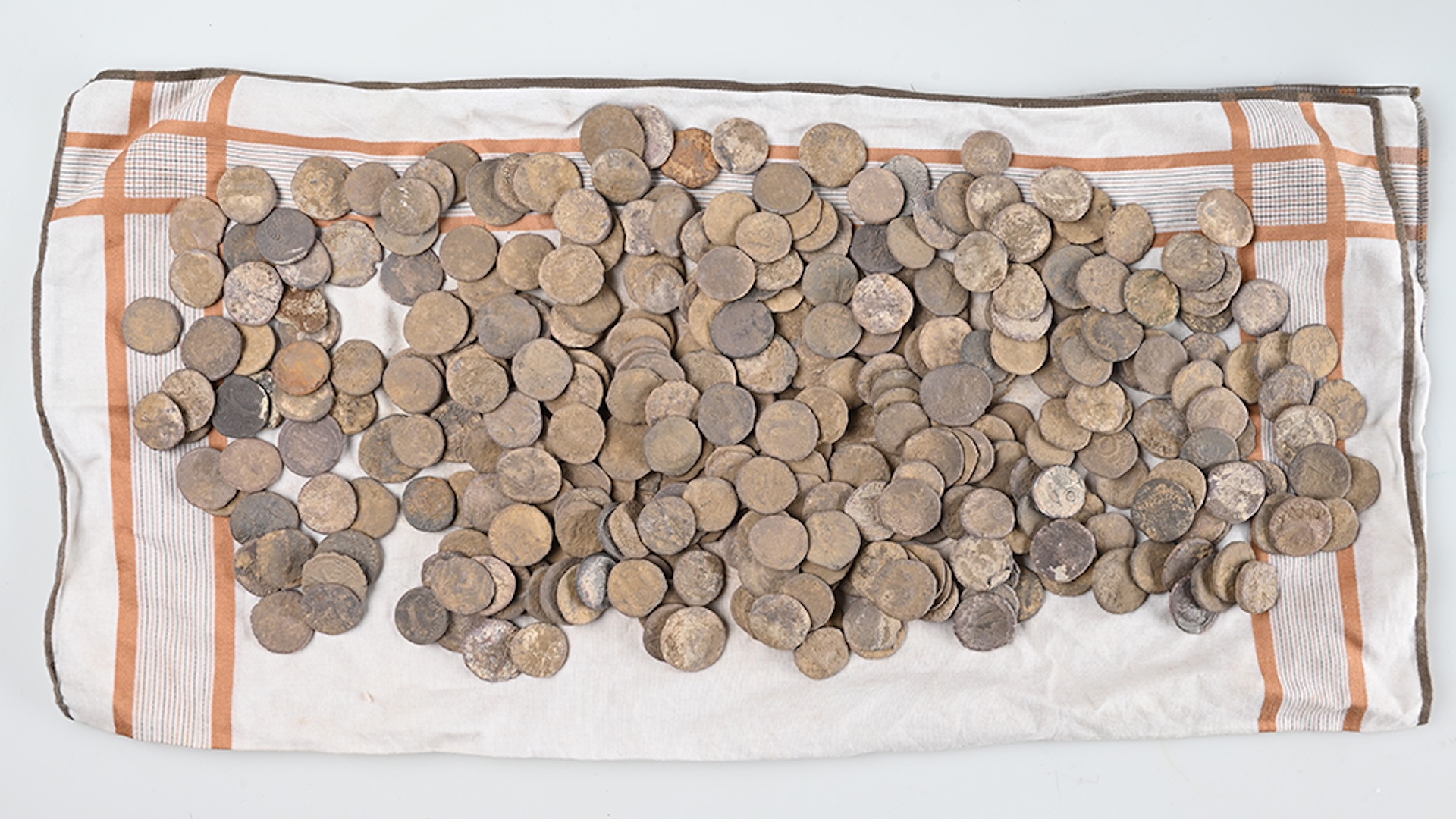 'Illegal' metal detectorist found a huge hoard of Roman treasure in Germany — and kept it hidden for 8 years
 2,000-year-old gold ring holds clue about lavish cremation burial unearthed in France
 1,600-year-old coin hoard found in complex tunnel system under Galilee dates to last Jewish rebellion against Romans
 'Gold coins started appearing one after another': 1,400-year-old hoard with money and jewelry unearthed near Sea of Galilee
 Up to 20,000 coins from Early Middle Ages discovered by man digging for worms near Stockholm
 French archaeologists uncover 'vast Roman burial area' with cremation graves 'fed' by liquid offerings
Latest in Romans
French archaeologists uncover 'vast Roman burial area' with cremation graves 'fed' by liquid offerings
Latest in Romans
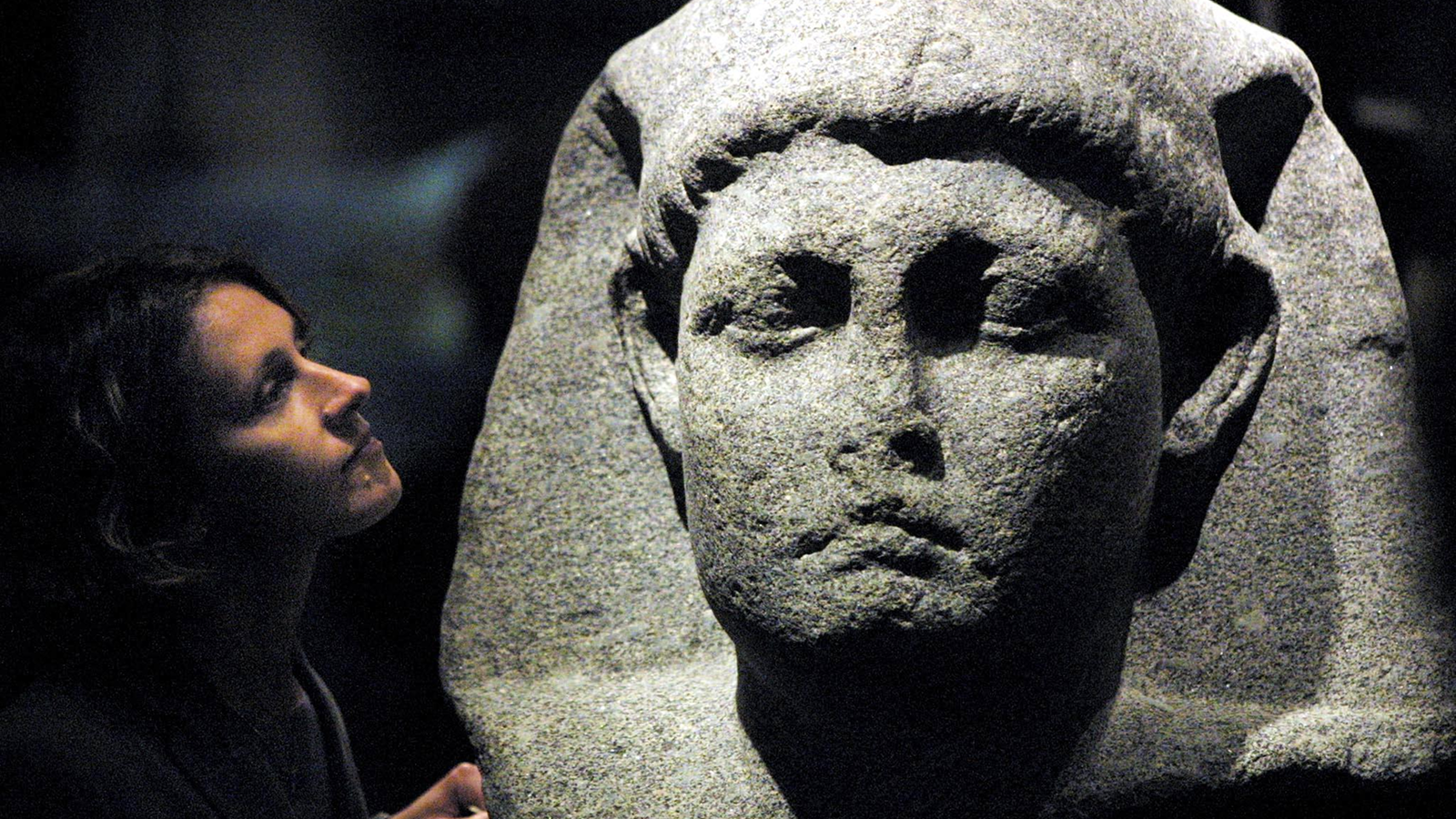 What if Antony and Cleopatra had defeated Octavian?
2,000-year-old gold ring holds clue about lavish cremation burial unearthed in France
What if Antony and Cleopatra had defeated Octavian?
2,000-year-old gold ring holds clue about lavish cremation burial unearthed in France
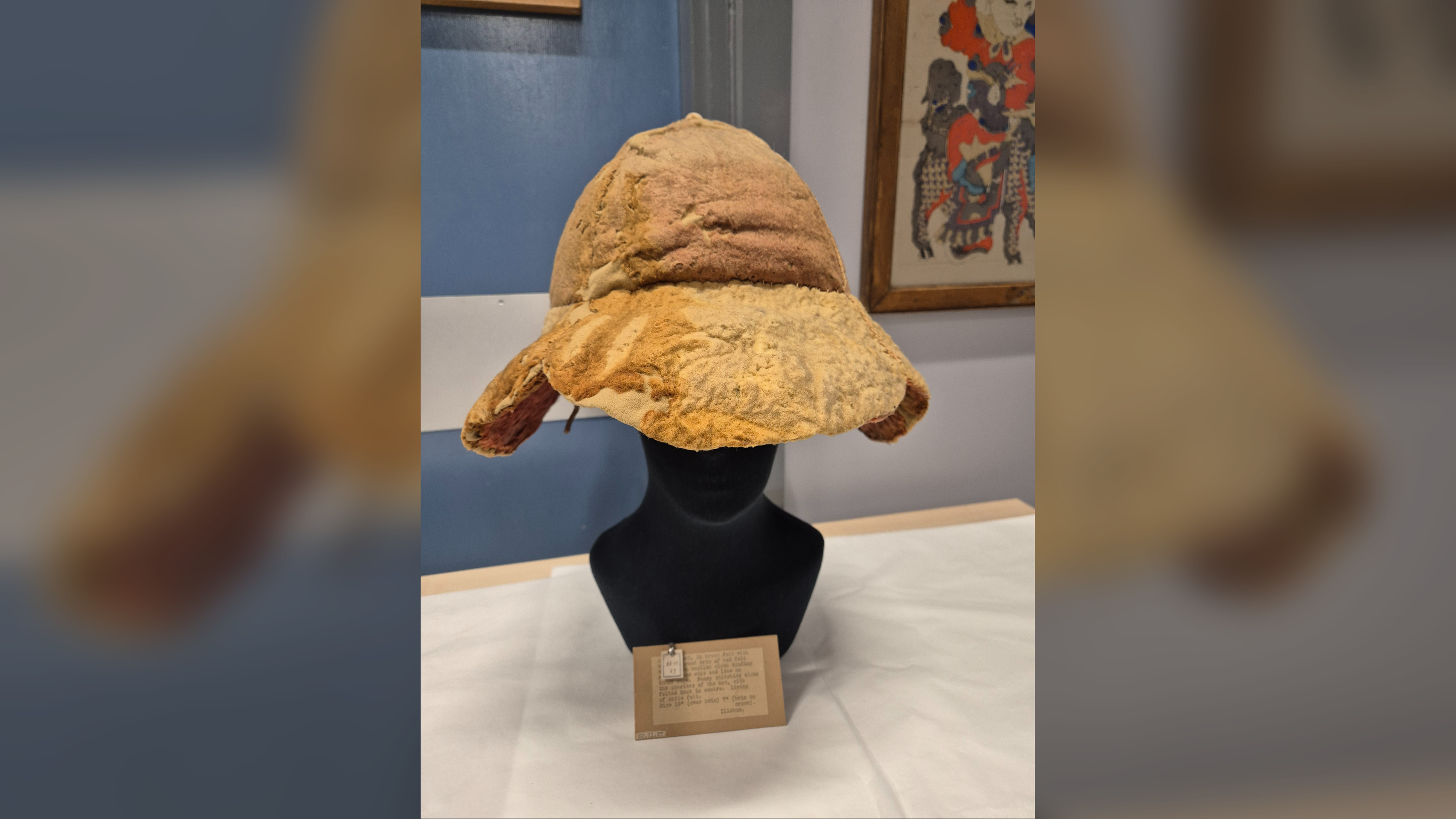 Roman sun hat: A 'very rare' 1,600-year-old brimmed cap that may have protected a Roman soldier from Egyptian sandstorms
 Archaeologists discover decapitated head the Romans used as a warning to the Celts
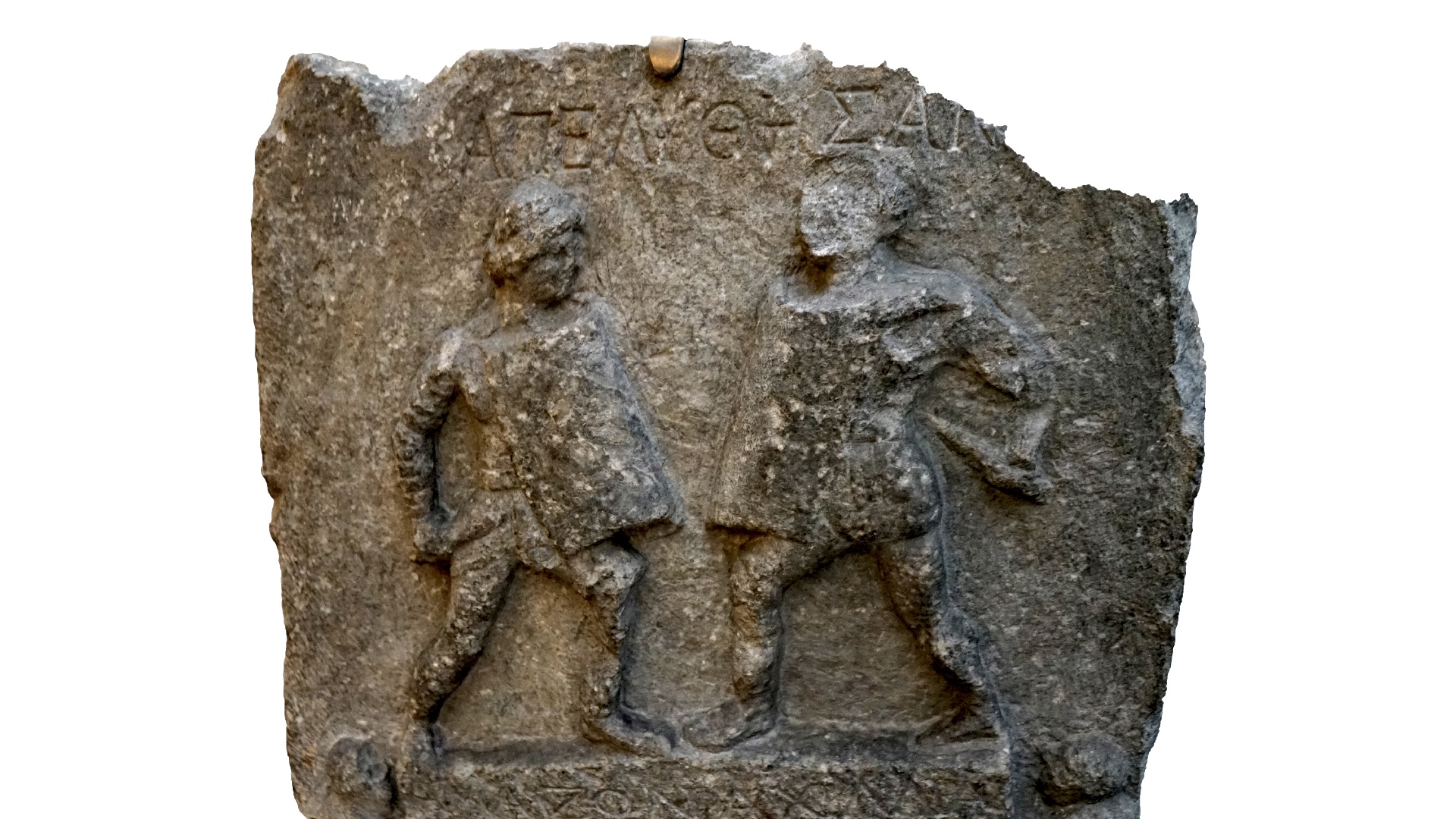 Were there female gladiators in ancient Rome?
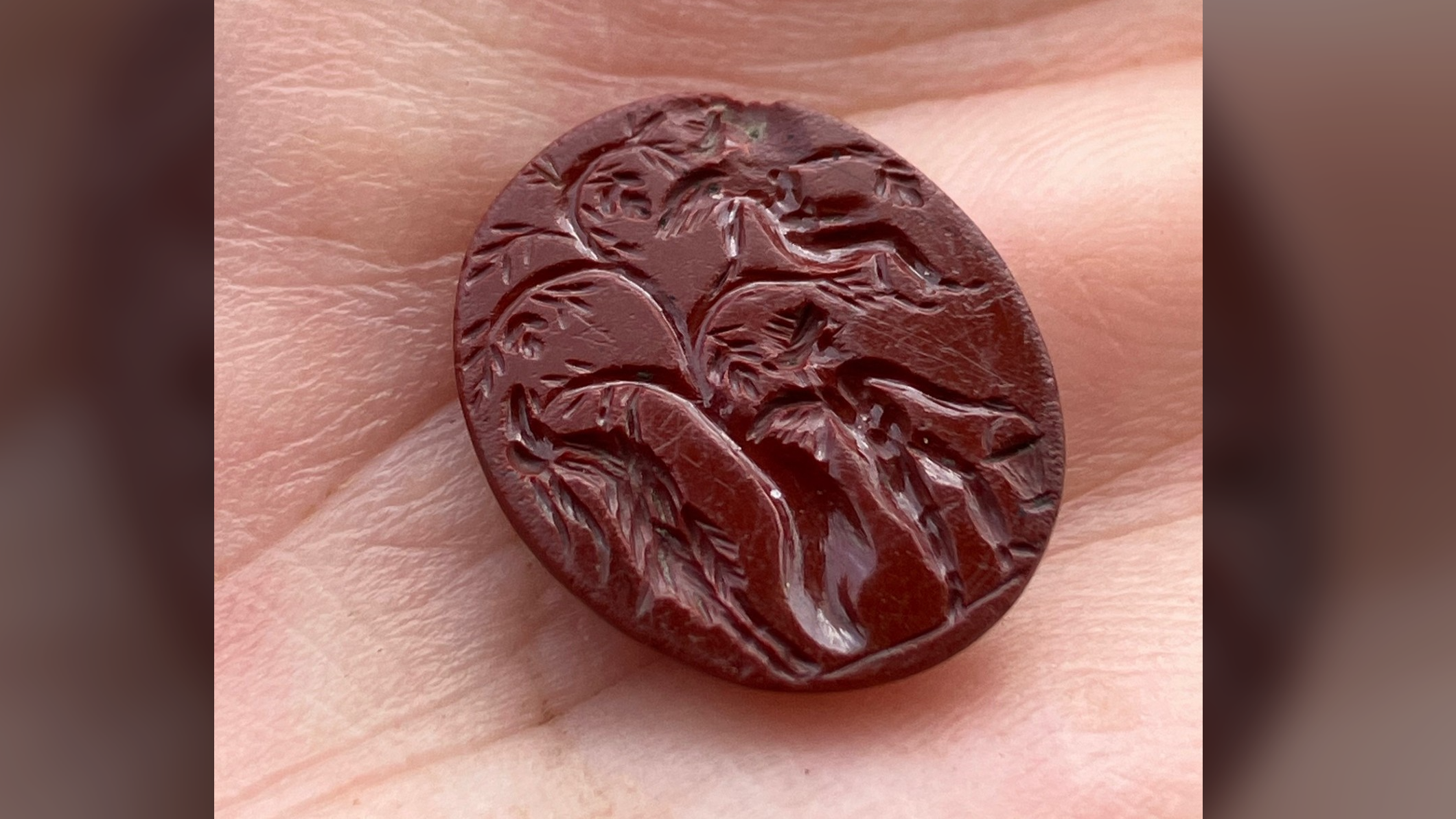 Archaeologists find 'unique' blood-red gemstone at Roman fort beyond Hadrian's Wall
Latest in News
1,800-year-old 'piggy banks' full of Roman-era coins unearthed in French village
Archaeologists find 'unique' blood-red gemstone at Roman fort beyond Hadrian's Wall
Latest in News
1,800-year-old 'piggy banks' full of Roman-era coins unearthed in French village
 CDC panel, stuffed with vaccine skeptics, votes to end recommendation for universal newborn hepatitis B vaccination
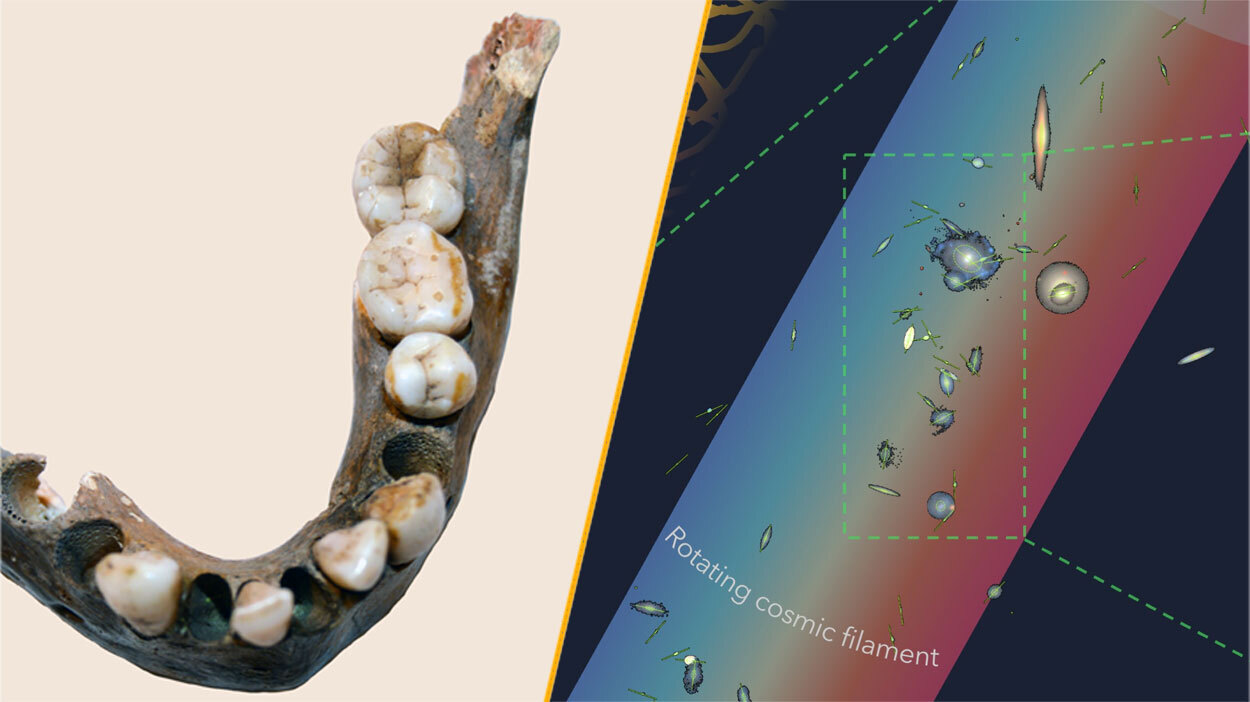 Science news this week: A human population isolated for 100,000 years, the biggest spinning structure in the universe, and a pit full of skulls
 Giant sunspot on par with the one that birthed the Carrington Event has appeared on the sun — and it's pointed right at Earth
 Male human heads found in a 'skull pit' in an ancient Chinese city hint at sex-specific sacrifice rituals
 Could aging eggs be 'rejuvenated'? New tool may help pave the way to fertility-extending treatments
LATEST ARTICLES
Could aging eggs be 'rejuvenated'? New tool may help pave the way to fertility-extending treatments
LATEST ARTICLES- 1What if Antony and Cleopatra had defeated Octavian?
- 2Science history: Female chemist initially barred from research helps helps develop drug for remarkable-but-short-lived recovery in children with leukemia — Dec. 6, 1954
- 3Science news this week: A human population isolated for 100,000 years, the biggest spinning structure in the universe, and a pit full of skulls
- 4CDC panel, stuffed with vaccine skeptics, votes to end recommendation for universal newborn hepatitis B vaccination
- 5Giant sunspot on par with the one that birthed the Carrington Event has appeared on the sun — and it's pointed right at Earth