 Chevrolet Brazil
One of the biggest developments in the American automotive market in the last five years has been the birth of an entirely new segment of small pickup trucks, led by the Ford Maverick and the Hyundai Santa Cruz. Rather than the small, body-on-frame 'minitrucks' that were popular from the 1970s through the 2000s, this new generation of small pickups is much more car-like. They use unibody construction, have transversely mounted engines with either FWD or AWD and have four doors. In that sense, they are closer to being ”CUVs with an open bed' than a traditional pickup truck – and that's exactly what's made them so popular.
Despite the big sales success of the Ford Maverick and the warm reception to the Santa Cruz, to this point, those two have remained the only vehicles in this class available to North American buyers. But they are far from the only vehicles of this type sold around the world. In fact, both of Ford's chief pickup rivals, Ram and Chevrolet, already sell similar trucks in South America, the Ram Rampage and the Chevy Montana.
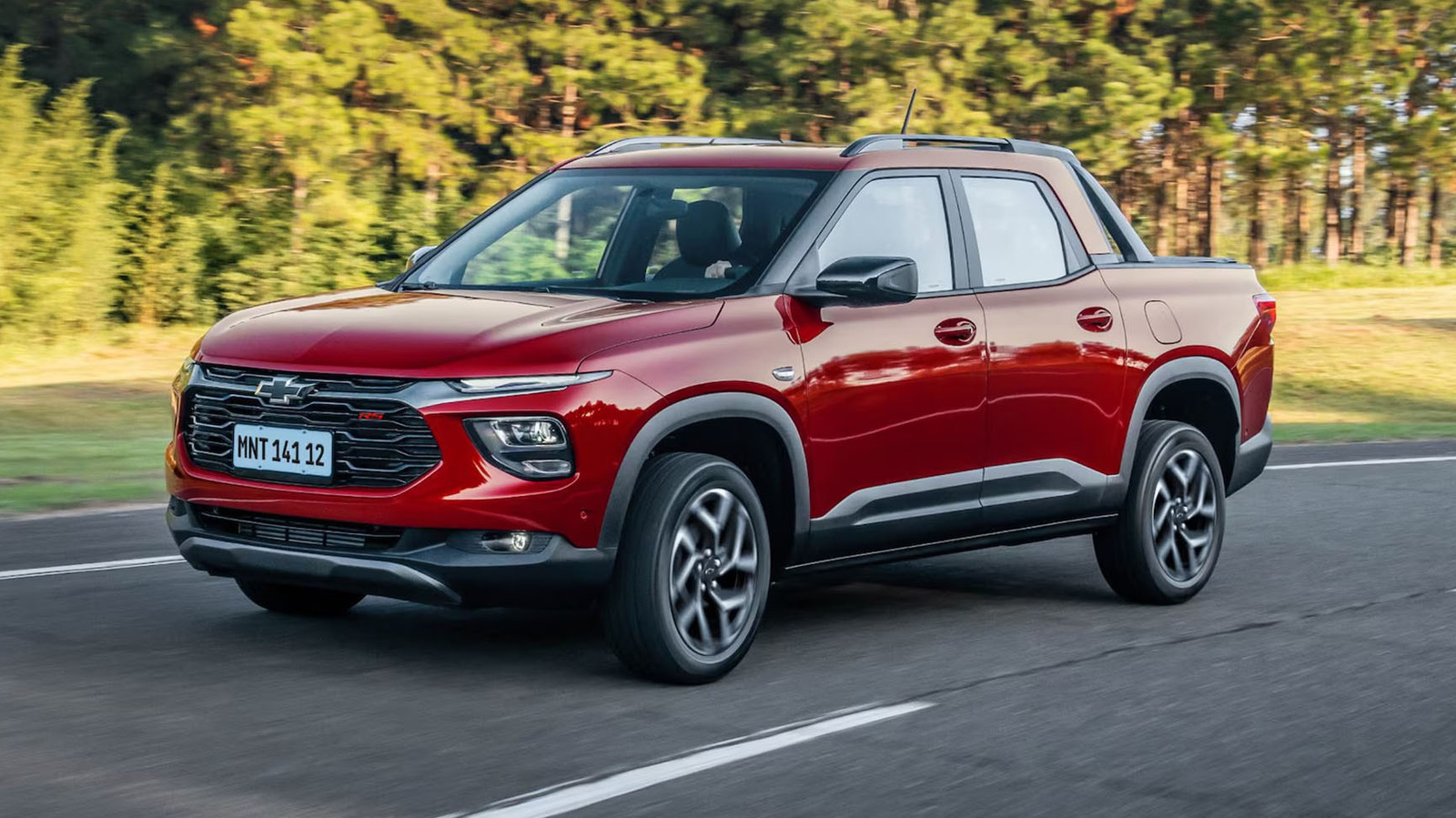
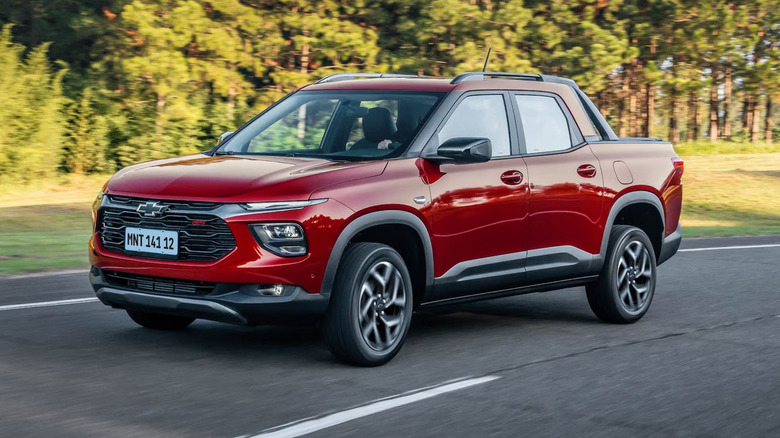
Given the massive popularity of Chevy's larger trucks in America, GM adding the Montana to the North American Chevy lineup as a Maverick-fighter seems like a no-brainer, right? Well, there are a few reasons why the Montana in its current form might not be the true Maverick rival that GM needs, including its small size, lack of AWD, and underpowered engine.
Finding the sweet spot of size and capability
 Chevrolet Brazil
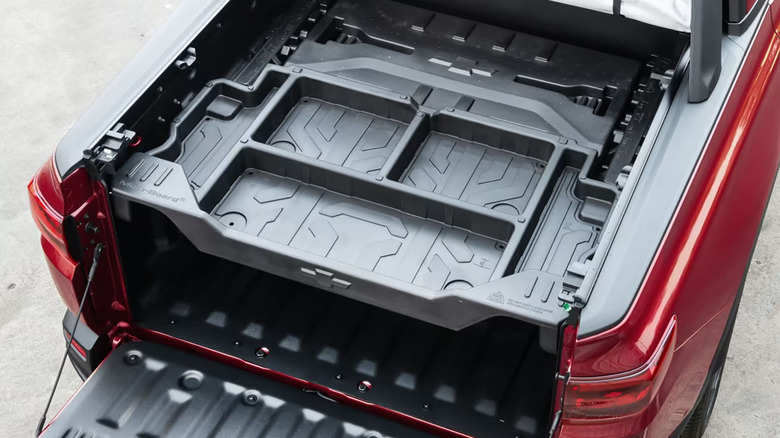
First and foremost, one of the biggest things that separates the Chevy Montana from the Maverick and Santa Cruz is its size. It's hard to tell in photos, but the Chevy is significantly smaller than both the Hyundai and Ford. It's about 14 inches shorter than the Maverick and 10 inches shorter than the Santa Cruz. It's also about an inch narrower than the already narrow Maverick. While having a smaller footprint can be good for those who drive a lot in the city, that also means less space for cargo and/or passengers.
Likewise, the Montana is quite low on power by the standards of the American market, and it looks even more underpowered when compared directly to the Maverick and Santa Cruz. The Chevy offers just one engine – a 1.2-liter turbocharged three-cylinder that makes only 139 horsepower. By comparison, the Maverick can be had with up to 250 horsepower, and the Santa Cruz with up to 281 horsepower. Even the less powerful, base versions of the Ford and Hyundai outgun the Chevy by over 50 horsepower. And the Montana is offered only with front-wheel drive.
Now that the 2025 Maverick offers an AWD-hybrid combination, its mix of fuel efficiency and all-weather performance is hard to match. If the Montana were to come to America, it would likely need both a power bump and the availability of AWD for those who live in colder, snowier regions.
A different truck for a different market
 Chevrolet Brazil
The truth is, the Chevy Montana's lack of competitiveness is not its own fault – or the fault of GM's strategy. Despite its similar appearance and seemingly similar mission, the Montana is a fundamentally different vehicle for a different market. The Maverick and Santa Cruz are both newer models developed specifically with the American market in mind. The Montana, on the other hand, though improved and refined from its earlier versions, is still the third generation of a model that's always been aimed at the South American market – cheaper, smaller, more basic in its approach. It's possible that with a few changes, the Montana, or a truck based on it, could end up being a successful addition to Chevy's American lineup, but GM would have to weigh the costs of doing that versus a clean sheet product like the Maverick and Santa Cruz.
Finally, you can't talk about the possibilities of small trucks in America without mentioning the impact that CAFE standards have had in making American pickups larger and larger. The current CAFE standards are certainly one of the big reasons why we haven't yet seen more small trucks to compete with the Maverick, or a return to those workhorse mini-trucks of the past. However, with the Trump Administration recently signaling a desire for more small cars in the American market, there may yet be hope for seeing these smaller, simpler vehicles in American showrooms in the future.