
- Planet Earth
- Climate change
The Amazon rainforest currently has a few days or weeks of hot drought conditions per year, but researchers say this could increase to 150 days per year by 2100.
0 Comments Join the conversationWhen you purchase through links on our site, we may earn an affiliate commission. Here’s how it works.
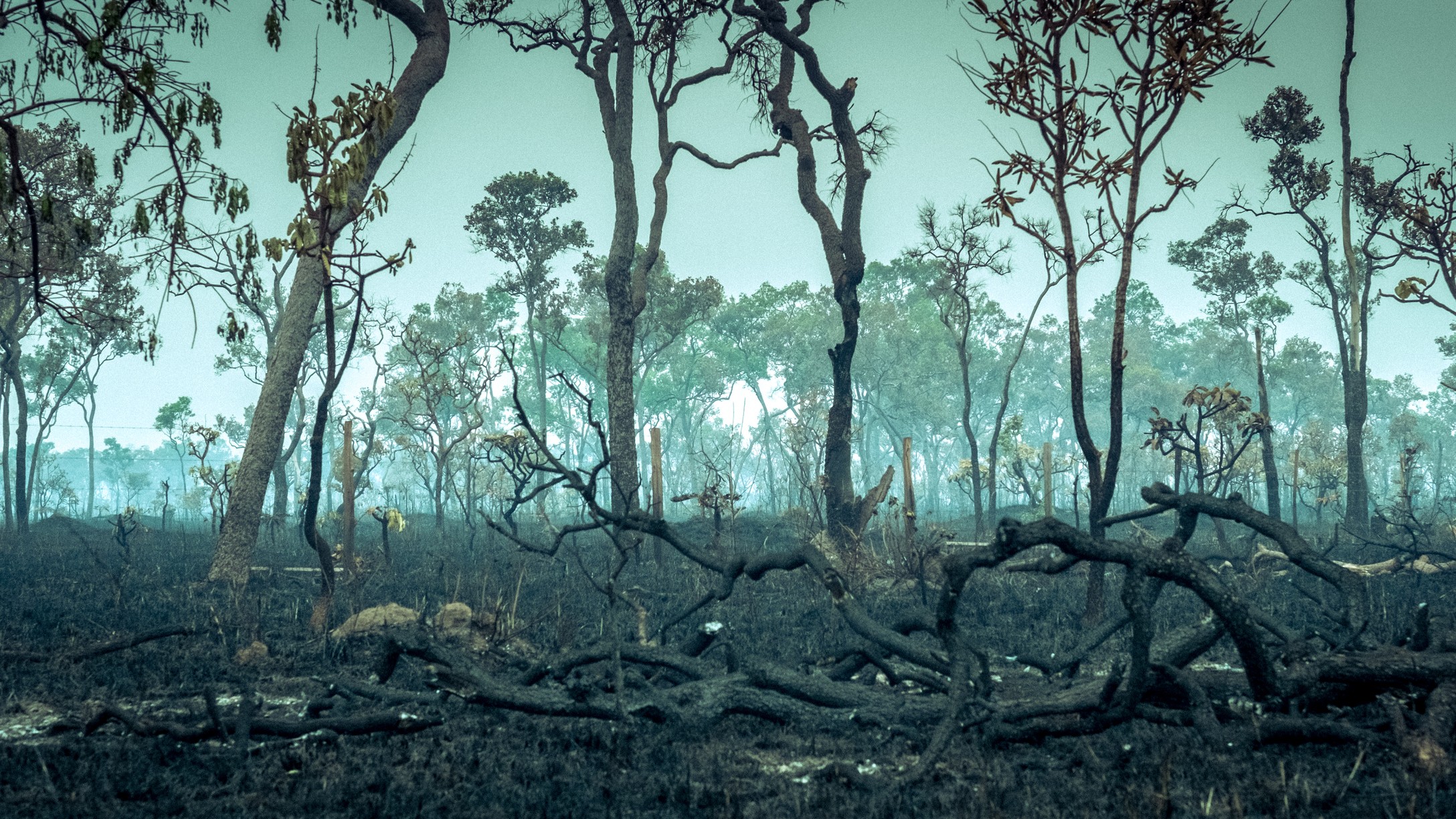 More frequent and intense droughts could push the Amazon rainforest into a "hypertropical" regime.
(Image credit: Alexandre Morin-Laprise/Getty Images)
More frequent and intense droughts could push the Amazon rainforest into a "hypertropical" regime.
(Image credit: Alexandre Morin-Laprise/Getty Images)
The Amazon rainforest is inching toward a "hypertropical" climate regime that has not existed on Earth for at least 10 million years, new research suggests.
Scientists predict this regime will cause more frequent and extreme droughts, which could lead to mass tree dieoffs. By 2100, hot droughts could bake the Amazon for 150 days of the year, extending even into the wet season, according to a study published Wednesday (Dec. 10) in the journal Nature.
You may like-
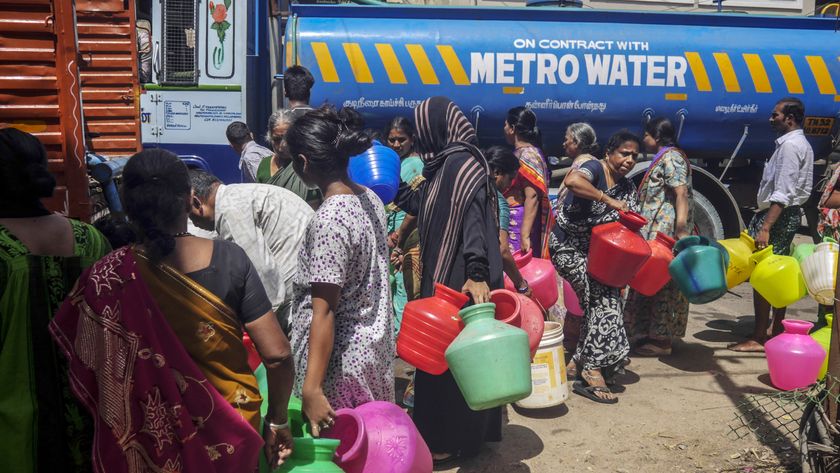 'An increasing attack on water resources from multiple fronts': Scientists warn 'day zero droughts' could hit before 2030
-
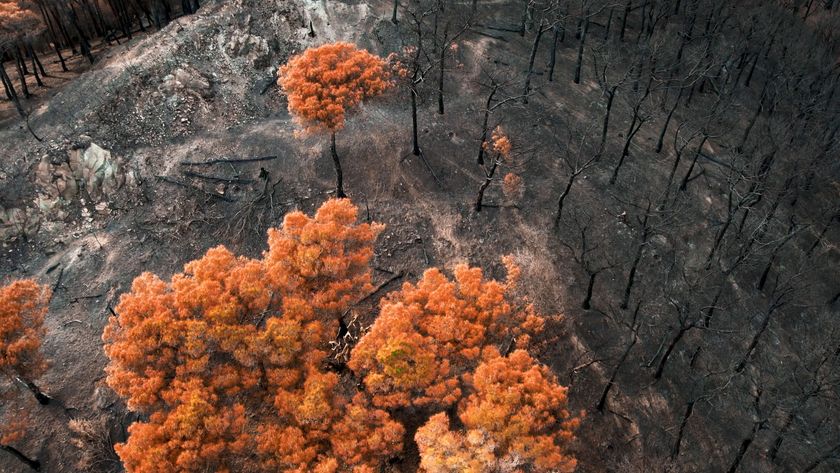 22 of Earth's 34 'vital signs' are flashing red, new climate report reveals — but there's still time to act
-
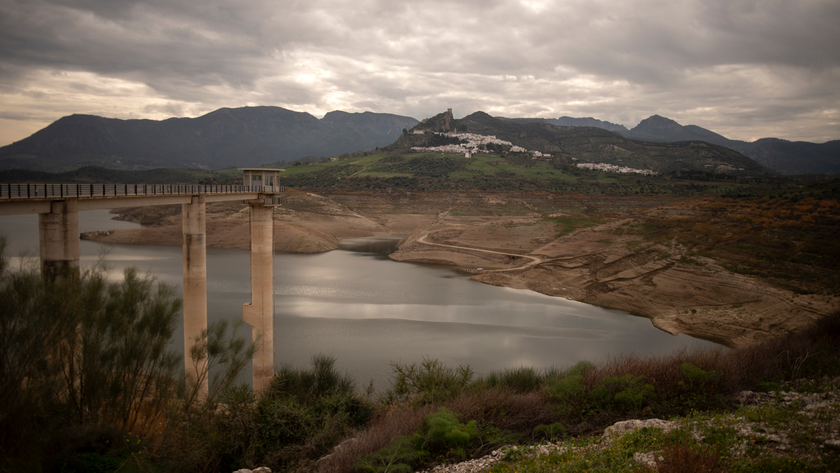 Collapse of key Atlantic current could bring extreme drought to Europe for hundreds of years, study finds
Scientists think a hypertropical climate last existed between 40 million and 10 million years ago, during the Eocene and Miocene periods. The average global temperature during the middle Eocene was 82 degrees Fahrenheit (28 degrees Celsius) — 25 F (14 C) warmer than the average today — and previous research suggests forests near the equator had fewer mangroves and evergreen trees.
Currently, the Amazon rainforest experiences hot drought conditions a few days or weeks of the year. But due to climate change, the region's dry season — which typically lasts from July to September — is getting longer, and the annual proportion of hotter-than-normal days is increasing.
Chambers and his colleagues analyzed 30 years of temperature, humidity, soil moisture and sunlight intensity data from a patch of forest north of Manaus, a city in the heart of the Brazilian Amazon. The researchers also examined information from sensors that measured water and sap flow inside tree trunks at this site, which helped them understand how the trees coped with drought conditions.
During droughts, trees struggled to access water and stopped absorbing carbon dioxide (CO2), the researchers found. That's because evaporation rates surged during droughts, reducing soil moisture. Trees responded by closing the pores on their leaves that control water and gas exchange with the atmosphere, so they preserved water. But this simultaneously blocked CO2 absorption, which in plants is necessary for tissue growth and repair.
Sign up for the Live Science daily newsletter nowContact me with news and offers from other Future brandsReceive email from us on behalf of our trusted partners or sponsorsBy submitting your information you agree to the Terms & Conditions and Privacy Policy and are aged 16 or over.As a result, when drought conditions were extreme, a proportion of the trees died from CO2 starvation. And when soil moisture dropped below a threshold of 33% — meaning only one-third of the soil's pores were filled with water — trees also developed bubbles in their sap that were akin to clots in human blood vessels, preventing normal circulation inside the plants' fluid-filled xylem.
"If there are enough embolisms, the tree just dies," Chambers said. The soil moisture threshold leading to this collapse was remarkably consistent across two El Niño years in 2015 and 2023, and it matched thresholds measured at another study site in the Amazon. "That was really surprising to everyone," he said.
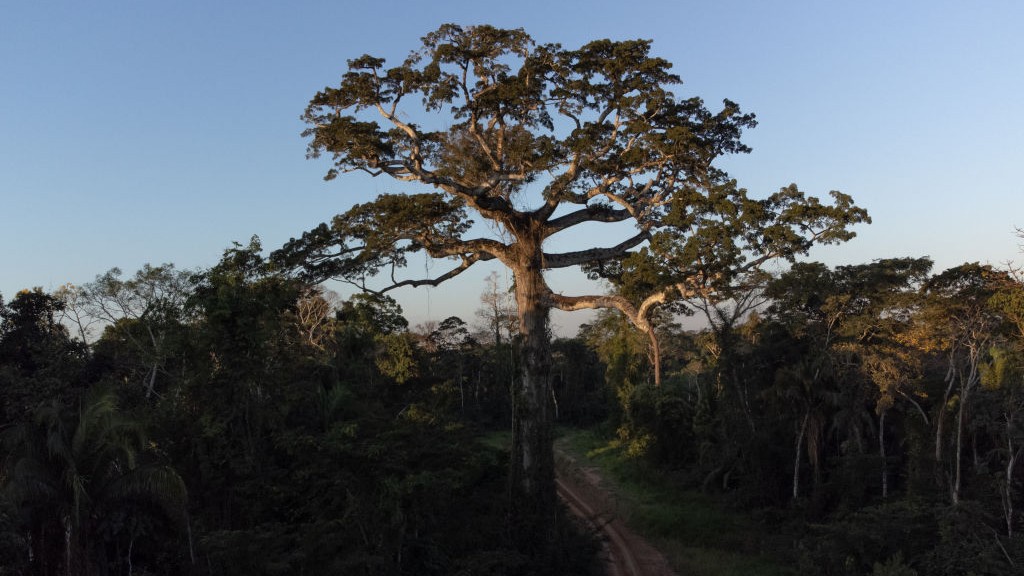
Annual tree mortality in the Amazon rainforest is currently just above 1%, but it could rise to 1.55% by 2100, the researchers found. This may seem insignificant, but it makes a huge difference on the scale of the entire rainforest, Chambers said.
Fast-growing trees were more vulnerable to hot droughts than their slow-growing counterparts, because they needed abundant water and CO2 to sustain this growth. This suggests slow-growing trees, such as the yellow ipê (Handroanthus chrysanthus) and the Shihuahuaco (Dipteryx micrantha), will eventually dominate the Amazon as temperatures rise — if these trees can cope with increasing water stress and the rate of temperature change, that is.
RELATED STORIES—Amazon rainforest is approaching 'tipping points' that could transform it into a drier savanna
—Amazon rainforest trees are resisting climate change by getting fatter from CO2 in the atmosphere
—Tropical rainforests could get too hot for photosynthesis and die if climate crisis continues, scientists warn
The results indicate that rainforests in other parts of the world, such as western Africa and Southeast Asia, may also be transitioning to a hypertropical climate regime. This shift has dramatic implications for Earth's carbon cycle, because rainforests absorb huge amounts of CO2 that would otherwise end up in the atmosphere.
The predictions of what could happen to the Amazon by 2100 assume negligible reductions in CO2 emissions, so "it's up to us to what extent we're actually going to create this hypertropical climate," Chambers said. "If we're just going to emit greenhouse gases as much as we want, without any control, then we're going to create this hypertropical climate sooner."
TOPICS Amazon rainforest Sascha PareSocial Links NavigationStaff writer
 Sascha is a U.K.-based staff writer at Live Science. She holds a bachelor’s degree in biology from the University of Southampton in England and a master’s degree in science communication from Imperial College London. Her work has appeared in The Guardian and the health website Zoe. Besides writing, she enjoys playing tennis, bread-making and browsing second-hand shops for hidden gems.
You must confirm your public display name before commenting
Please logout and then login again, you will then be prompted to enter your display name.
Logout Read more 'An increasing attack on water resources from multiple fronts': Scientists warn 'day zero droughts' could hit before 2030
 22 of Earth's 34 'vital signs' are flashing red, new climate report reveals — but there's still time to act
 Collapse of key Atlantic current could bring extreme drought to Europe for hundreds of years, study finds
 Global warming is forcing Earth's systems toward 'doom loop' tipping points. Can we avoid them?
 It's official: The world will speed past 1.5 C climate threshold in the next decade, UN says
 The Panama Canal needs a staggering amount of water to operate. Climate change could threaten that, study warns
Latest in Climate change
The Panama Canal needs a staggering amount of water to operate. Climate change could threaten that, study warns
Latest in Climate change
 'It is simply too hot to handle': 2024 was Arab region's hottest year on record, first-of-its-kind climate report reveals
 Once-in-a-century floods set to become annual events in northeastern US in the next 75 years, study finds
 Climate change is real. It's happening. And it's time to make it personal.
 World's first global carbon tax was about to be introduced. Trump dealt a 'devastating blow' to the deal.
Global warming is forcing Earth's systems toward 'doom loop' tipping points. Can we avoid them?
It's official: The world will speed past 1.5 C climate threshold in the next decade, UN says
Latest in News
Amazon rainforest is transitioning to a 'hypertropical' climate — and trees won't survive that for long
World's first global carbon tax was about to be introduced. Trump dealt a 'devastating blow' to the deal.
Global warming is forcing Earth's systems toward 'doom loop' tipping points. Can we avoid them?
It's official: The world will speed past 1.5 C climate threshold in the next decade, UN says
Latest in News
Amazon rainforest is transitioning to a 'hypertropical' climate — and trees won't survive that for long
 'It is the most exciting discovery in my 40-year career': Archaeologists uncover evidence that Neanderthals made fire 400,000 years ago in England
 This bright star will soon die in a nuclear explosion — and could be visible in Earth's daytime skies
 Russia's Bezymianny volcano blew itself apart 69 years ago. It's now almost completely regrown.
 Gray hair may have evolved as a protection against cancer, study hints
 Scientists create new solid-state sodium-ion battery — they say it'll make EVs cheaper and safer
LATEST ARTICLES
Scientists create new solid-state sodium-ion battery — they say it'll make EVs cheaper and safer
LATEST ARTICLES- 1Scientists create new solid-state sodium-ion battery — they say it'll make EVs cheaper and safer
- 2'It is the most exciting discovery in my 40-year career': Archaeologists uncover evidence that Neanderthals made fire 400,000 years ago in England
- 3Russia's Bezymianny volcano blew itself apart 69 years ago. It's now almost completely regrown.
- 4The 17 best fitness gifts to buy for gym lovers, hand-picked by a personal trainer
- 5New discoveries at Hadrian's Wall are changing the picture of what life was like on the border of the Roman Empire