Listen to this essay
When African nations such as Nigeria, Ghana, Senegal and Cameroon claimed independence in the mid-20th century, they inherited more than borders and fragile institutions; they also inherited a political philosophy. Liberalism, born of Europe’s Enlightenment, was presented as the universal grammar of progress. It came clothed in the language of democracy, development and human rights, promising that multiparty elections, private property, free markets and individual rights would secure for Africa a swift entry into modernity.
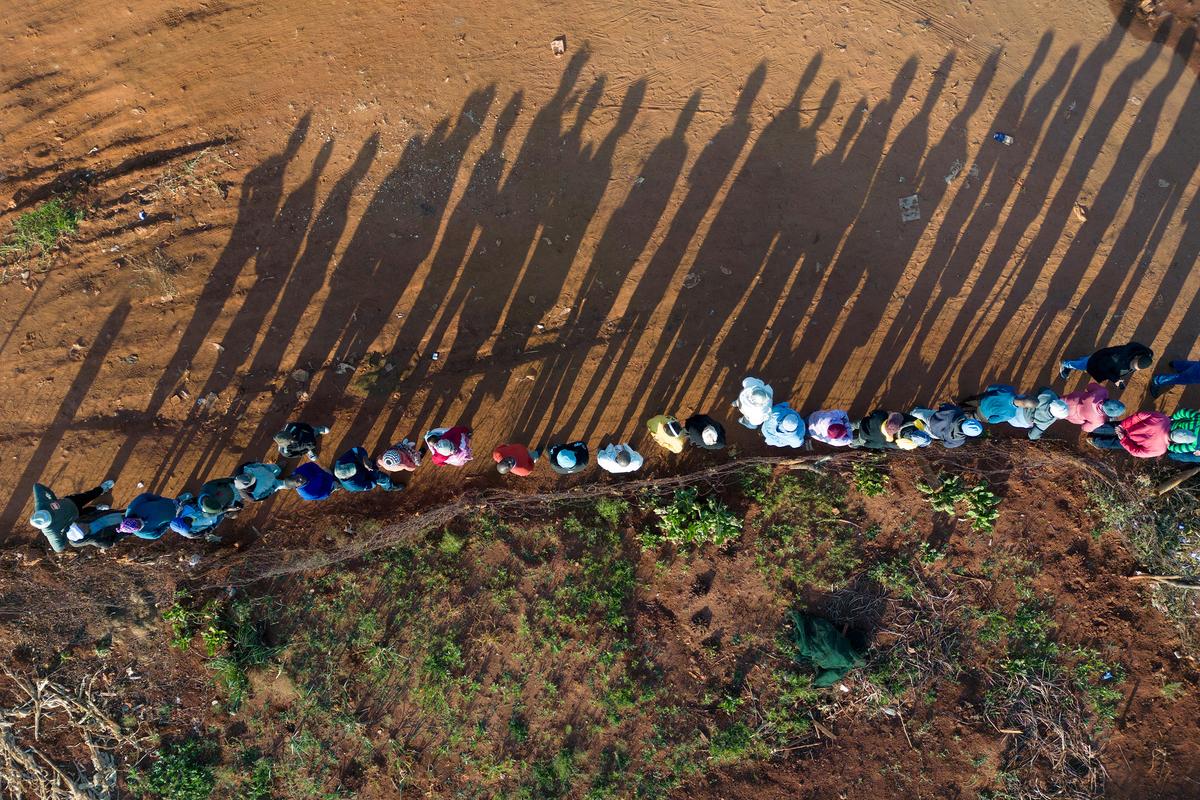
Yet, decades later, the record is sobering. Across much of Africa, democracy often feels like a ceremony without substance – citizens queue under the sun to vote, only for results to be decided in hotel rooms or courtrooms. Nigeria’s 2019 and 2023 elections, Kenya’s post-election violence of 2007, and Zimbabwe’s recurring electoral crises illustrate how manipulation and ethnic mobilisation routinely subvert the people’s will. Economic liberalisation, hailed as a gateway to growth, frequently delivered hardship instead: Nigeria’s 1986 Structural Adjustment Programme brought mass retrenchments and inflation; Ghana’s ‘economic recovery’ deepened inequality; and Zambia’s privatisations eroded local industries. Meanwhile, sovereignty itself bends under the weight of conditional loans from the International Monetary Fund (IMF) and the World Bank, and the subtle dictates of global NGOs that shape domestic policy in the name of aid. On paper, citizens are free; in reality, their autonomy is trapped in the web of foreign dependence and internal elite capture.
This failure cannot be explained solely by poor leadership or weak institutions. It reflects a deeper misalignment: liberalism, shaped by Western histories of individualism and capitalism, sits uneasily with Africa’s communal traditions, relational ethics and socioeconomic realities. If Africa is to find a political path that truly resonates with its people, it must interrogate liberalism’s limits and begin the work of decolonising political thought, by drawing upon its own histories, values and philosophies to imagine alternatives.
Liberalism is often portrayed as universal, but its origins are distinctly European. It emerged in the 17th and 18th centuries, when Europe was grappling with religious wars, absolutist monarchies, and the rise of capitalist economies. Its ideals were shaped by Enlightenment thinkers such as John Locke, who championed natural rights; Adam Smith, who gave free markets their moral basis; and Jean-Jacques Rousseau, who elaborated the social contract. The Enlightenment age celebrates reason, science and the autonomy of the individual as the hallmarks of progress and human flourishing. In the 19th century, many of these ideas were crystallised in the work of John Stuart Mill, someone who wrote explicitly in On Liberty (1859) that liberalism was unsuitable for nations in their ‘nonage’, suggesting that they weren’t yet ready for liberalism – and needed a different approach, and at the same time implying a dubious hierarchy of cultural development.
Beneath the rhetoric of democracy and free markets lay a network of control
Liberal ideas flourished in societies with particular historical conditions: the growth of industrial capitalism, relatively homogenous nation-states, and centuries of contestation over monarchy and Church power. When colonial rule ended, liberalism was exported wholesale to Africa, with little regard for whether it fit societies shaped by communal land tenure, diverse ethnic structures, and long histories of exploitation.
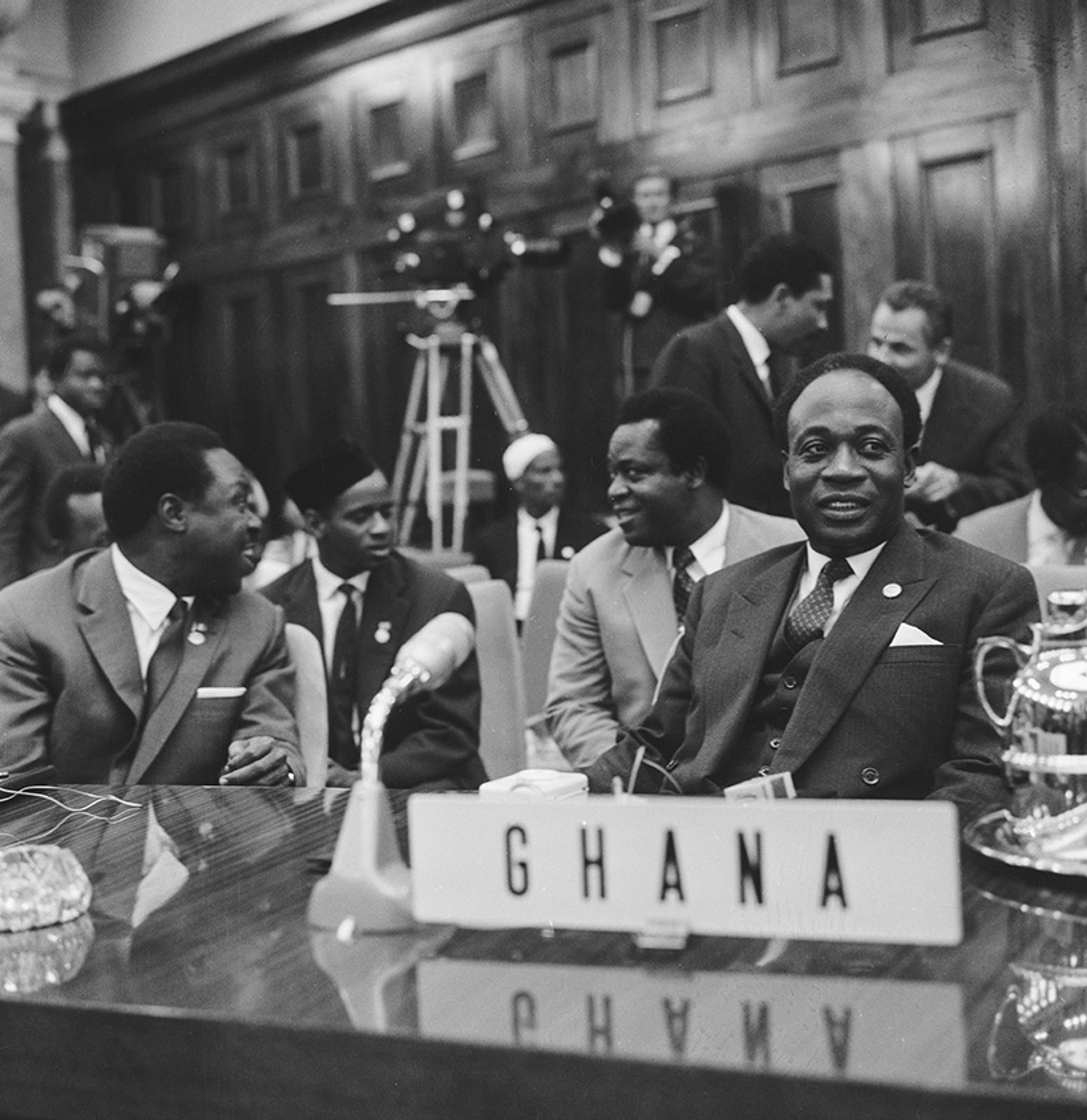
President Kwame Nkrumah at the first conference of the Non-Aligned Movement in Belgrade, Yugoslavia in September 1961. Photo by Keytsone/Getty Images
Ghana’s first president, Kwame Nkrumah, in his seminal work Neo-Colonialism: The Last Stage of Imperialism (1965), cautioned that the liberal order exported to Africa functioned less as an instrument of emancipation and more as a mechanism of continued Western subjugation. He contended that beneath the rhetoric of democracy and free markets lay a network of control, sustained through economic dependency, cultural infiltration and political manipulation. Western powers, through the IMF, the World Bank and multinational corporations, dictated fiscal policies that tethered African economies to external capital and import dependence. Political tutelage was maintained through conditional aid, diplomatic interference and the promotion of governance models that privileged elite compliance over popular sovereignty. Even cultural and educational systems were subtly restructured to favour Western values while discrediting Indigenous epistemologies. Thus, the liberal state in Africa, though draped in the discourse of freedom and modernisation, became the principal architecture through which imperial power was preserved under new guises.
At independence, liberalism’s appeal was understandable. Multiparty democracy promised choice. Markets promised growth. Rights promised dignity. But, over time, the reality fell short. The consequences of liberalism’s empty promises are a stark reality across many African states. Some of these consequences are explained below:
Elections without democracy
African countries hold elections more frequently than ever before, but citizens often describe them as an elite game rather than a people’s mandate. The point is corroborated by Ifeoma Ezeabasili, a Nigerian-based researcher, who opines that: ‘Vote-buying is a persistent challenge that has undermined the integrity of elections in Nigeria. It is a practice where political actors offer material inducements, such as cash, food or other gifts, in exchange for votes.’ This means that vote-buying, ballot rigging and ethnic patronage undermine the ideal of political equality. In Nigeria, for instance, the 2019 and 2023 federal elections descended into contests where ethnic loyalties – rather than a unifying national vision – dictated voting behaviour. In the 2019 presidential election, voting patterns in Kano and Lagos revealed deep regional and religious polarisation, while allegations of ballot manipulation and voter suppression in Rivers and Akwa Ibom states further eroded public trust. Similarly, in the 2023 election, the fierce contest between Bola Tinubu, Atiku Abubakar and Peter Obi exposed entrenched ethnic divisions, with Nigeria’s south-east largely backing the Labour Party, and the north rallying behind the centrist All Progressives Congress (APC) and the centre-right People’s Democratic Party (PDP). These dynamics left many Nigerians feeling excluded from the democratic process and disillusioned by the persistent triumph of identity politics over national cohesion.
Rights without justice
Liberalism privileges individual rights, but in societies where personhood is understood relationally – as among the Akan (an ethnic group who are predominantly located in the southern and central regions of Ghana), for whom one becomes a ‘person’ through community – rights talk, with its stress on individual rights, often feels incomplete. Land tenure illustrates this tension: while liberal law protects private property, many African communities such as the Igbo, the Zulu and the Akan regard land as a communal trust held for future generations. Imposing liberal legal frameworks has frequently led to dispossession, conflict and erosion of cultural ties.
Markets without development
The World Bank and the IMF, echoing liberal economic orthodoxy, pushed African states to privatise industries, cut subsidies, and open markets. Structural adjustment programmes in the 1980s and ’90s such as fiscal and monetary reforms, trade liberalisation, deregulation and public sector reforms were supposed to unleash efficiency and growth. Instead, they shrank public services, fuelled unemployment, and deepened poverty. The ‘free market’ became, in practice, a system tilted toward foreign investors and local elites, leaving ordinary citizens behind.
Freedom without sovereignty
Perhaps most troubling, liberalism in Africa has often been tethered to external control. Donor agencies prescribe governance reforms; NGOs promote Western conceptions of democracy; financial institutions set economic policy. As Frantz Fanon warned in The Wretched of the Earth (1961), independence risks becoming a sham if political forms are borrowed without genuine control over resources and destiny. Fanon went further to submit that the problem of postcolonial Africa is the absence of ideology. It is this void that liberalism and its apostles seek to fill in Africa.
Thus, liberalism in Africa often produces institutions without substance – behind the façade of freedom something more colonial still lurks. While constitutions, elections and rights charters exist on paper, their ability to transform lives remains limited.
The tension between liberalism and African thought is most evident in their divergent conceptions of the human person. Liberalism privileges the autonomous, rational and self-interested individual, viewing society as an aggregate of free agents constrained only by rights-protecting laws. Mill, for example, in On Liberty, is almost entirely focused on giving individuals sufficient space to experiment with their lives and to make their own mistakes, as long as they aren’t directly harming others by their choices.
By contrast, African thought foregrounds relational personhood. The Kenyan-born philosopher John Mbiti’s dictum ‘I am because we are, and since we are, therefore I am’ captures a worldview echoed in Ubuntu philosophy, which stresses interdependence, solidarity and communal responsibility. Personhood, in this framework, is not given but realised through participation in social life. It is earned through moral maturity and communal participation, not automatically given at birth. For instance, in the Igbo tradition of Nigeria, a newborn is not yet considered a mmadu (full person) until social rituals such as naming ceremonies, moral upbringing and community recognition affirm the child’s identity. Similarly, in the Akan tradition of Ghana, a person attains full personhood (onipa) by living virtuously, showing respect for elders, and contributing to communal welfare – failure to do so earns one the label onnye onipa (‘not a person’). Among the Yoruba, moral character (ìwà pẹ̀lẹ́) is central: a person of wealth or intelligence but lacking good character is not regarded as truly human. The Nigerian poet Ifeanyi Menkiti in his essay ‘Person and Community in African Traditional Thought’ (1984) interprets such examples to mean that personhood in African thought is a socially acquired moral status, achieved through community validation and ethical living, rather than mere biological existence.
In much of Africa, land is sacred, binding the living to ancestors and future generations
These ontological differences shape political practice. Liberalism valorises majority democratic rule and adversarial economic/trading competition, whereas many African traditions favoured consensus. As the Ghanaian philosopher Kwasi Wiredu observed, precolonial governance often relied on deliberation until agreement was reached, prioritising harmony over victory. Leadership was measured less by individual ambition than by the ability to sustain communal balance.
The contrast extends to property. Liberal regimes commodify land as a transferable asset. In much of Africa, however, land is sacred, binding the living to ancestors and future generations. To commodify it is to rupture identity and belonging.
The result is a deep incongruity: liberalism anchors freedom in individual autonomy, while African traditions insist that freedom acquires meaning only within community, with its particular location and history. To resolve this tension between African and imported traditions like liberalism, African scholars like Achille Mbembe from Cameroon, Ngũgĩ wa Thiong’o from Kenya, and Sabelo J Ndlovu-Gatsheni from Zimbabwe have called for a decolonising of the epistemic and ideological structures that shape life and institutions in Africa. This must begin with the decolonisation of political thought.
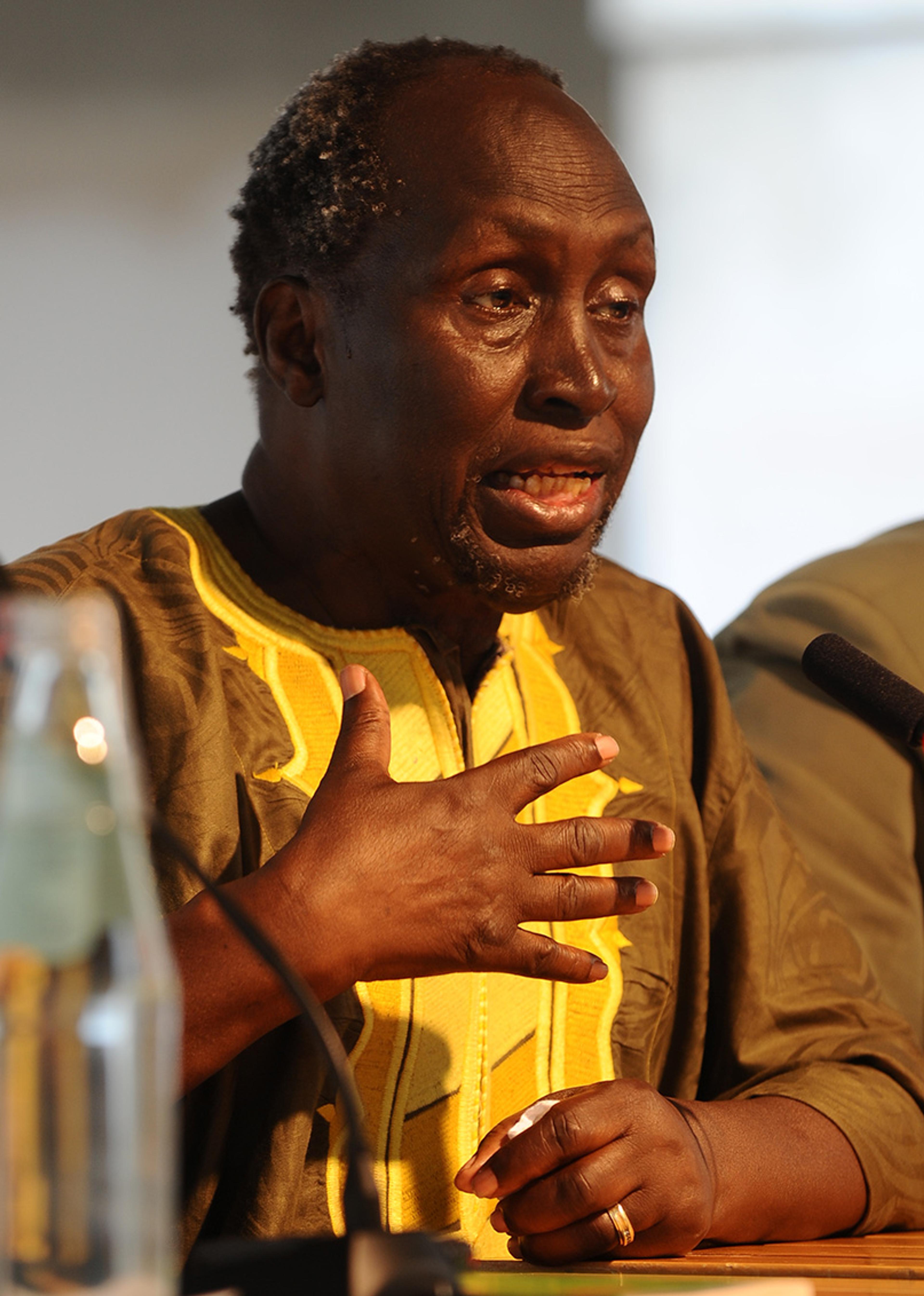
Ngũgĩ wa Thiong’o in 2012. Courtesy Wikipedia
To ‘decolonise’ political thought is not to reject every Western idea but to interrogate their relevance and reshape them in ways that serve Africa’s needs. As Ngũgĩ argued in Decolonising the Mind (1986), colonialism operates not just through armies and economies but through cultural and intellectual dominance. Liberalism, when adopted uncritically, becomes a form of cultural colonialism shaping how Africans imagine politics in ways that may not serve them. The decolonisation of political thought requires three moves:
- Critique: exposing how liberalism, despite appearances, sustains inequality and dependency.
- Recovery: reclaiming Indigenous traditions of governance, ethics and personhood.
- Reimagination: creating hybrid models that selectively borrow from global ideas while remaining grounded in African contexts.
Mbembe, in On the Postcolony (2001), stresses that, for Africa to imagine its own political future beyond borrowed categories, it must forge concepts that reflect its lived realities. Decolonising thought is thus not nostalgia, a naive desire to return to some alleged Golden precolonial age, but is a form of innovation that respects the best aspects of Africa’s past. These innovative interpretations of the African experience are gradually forming philosophical and ideological alternatives to liberalism. These African alternatives to liberalism are not static or completed systems of ideas, they are rooted in the lived experiences of the African people.
If liberalism has faltered, what might replace it? African thinkers and leaders have long proposed some alternatives:
Ubuntu philosophy
Ubuntu (meaning ‘humanity’ in languages such as Zulu) emphasises compassion, solidarity and interdependence. Politically, it supports participatory decision-making, restorative justice, and prioritising community over competition. South Africa’s much-admired Truth and Reconciliation Commission of 1996 drew on Ubuntu values to emphasise healing rather than vengeance.
African socialism
Figures like Julius Nyerere, the first president of Tanzania, and Kwame Nkrumah, the first president of Ghana, sought to build socialism rooted in African communal values rather than Marxist orthodoxy. Nyerere’s Ujamaa villages (from ‘fraternity’ in Swahili) aimed to promote collective ownership and self-reliance. While implementation was uneven, this vision of development anchored in solidarity remains a powerful critique of neoliberal capitalism.
Consensus democracy
Kwasi Wiredu proposed ‘consensus democracy’ as an alternative to adversarial party politics. Drawing from Akan traditions, he argued for deliberation until agreement, ensuring inclusivity and avoiding zero-sum contests. In traditional African consensus democracy, no individual holds veto power; rather, decisions emerge through prolonged dialogue until near-unanimity is achieved. Consensus in this context implies collective harmony, not absolute agreement. Mechanisms like mediation by elders, appeal to communal values, and prioritising peace over victory prevent stalemate and preserve social cohesion in governance. This model challenges the liberal assumption that politics must be competitive and divisive.
Pan-Africanism and anti-imperialism
Together with Fanon, the first president of Burkina Faso Thomas Sankara and the Guinea-Bissau revolutionary Amílcar Cabral emphasised that true liberation requires breaking economic dependency and asserting cultural pride. In office, Sankara pursued policies of self-sufficiency, land reform and gender equality, directly challenging the liberal development model. These alternatives are not perfect, but they illustrate that Africa need not be bound to one imported ideology.
For many Africans, the clash with liberalism is not theoretical but tangible in daily life. In Kenya, small farmers watch ancestral lands vanish under corporate claims because traditional communal tenure holds no place in imported liberal property law. In Nigeria, graduates queue for scarce jobs, wondering what ‘market freedom’ means in an economy dominated by patronage. In South Africa, communities still trapped in poverty ask whether liberal democracy has truly dismantled the structural chains of apartheid, or just perpetuated them by other means. Such stories expose the urgency of the debate: political philosophy is not mere abstraction but the difference between democracy as empowerment or betrayal, and freedom as dignity or dependency.
What would a decolonised African political thought look like? It would not mean a wholesale rejection of liberalism, nor a romanticised return to precolonial traditions. Rather, it would be a creative synthesis: a democracy that values consensus and inclusivity over narrow majority rule; an economy that balances individual initiative with communal solidarity; a rights framework that binds freedoms to duties; and a politics of sovereignty that resists domination while engaging critically with global experience.
This is a practical call to reclaim agency, to imagine futures that serve Africa’s people first
Such a future demands intellectual courage, policy innovation and grassroots participation. Universities must teach African philosophies alongside Western canons, leaders must think beyond donor prescriptions, and citizens must reclaim agency in shaping their societies. As Wiredu argued, the task is not to imitate the West but to think critically from Africa’s own resources – so that democracy becomes empowerment, freedom becomes dignity, and philosophy becomes a tool for liberation rather than dependency.
The failure of liberalism in Africa is not simply the fault of corrupt leaders or fragile states: it is a symptom of a deeper misfit between imported ideologies and lived realities. Liberalism promised democracy, rights and prosperity, yet what it too often delivered were hollow institutions, widening inequality and crippling dependency.
Decolonising political thought means asking with urgency: what kind of society do we want to build, and on whose terms? The answer will not be found in borrowed blueprints but in ideas rooted in Africa’s soil, spoken in its languages, and shaped by its values. However, while cross-cultural exchange is inevitable in today’s rapidly globalising world, Africans can selectively integrate liberal values such as rights and accountability within their communal ethical frameworks, thereby preserving cultural continuity and ensuring contextual relevance. Nonetheless, the question Is there an African alternative to liberalism? is not a matter for philosophers alone; it is a practical call to reclaim agency, to imagine futures that serve Africa’s people first. Africa must no longer remain a passive consumer of foreign ideologies but emerge as an innovator in global political thought, offering models of solidarity, community and justice that the world itself desperately needs. The time to begin is now.
Supported by a grant from the Open Society Foundations.
Political philosophyPoverty and developmentProgress and modernity9 December 2025EmailSavePostShareSYNDICATE THIS ESSAY